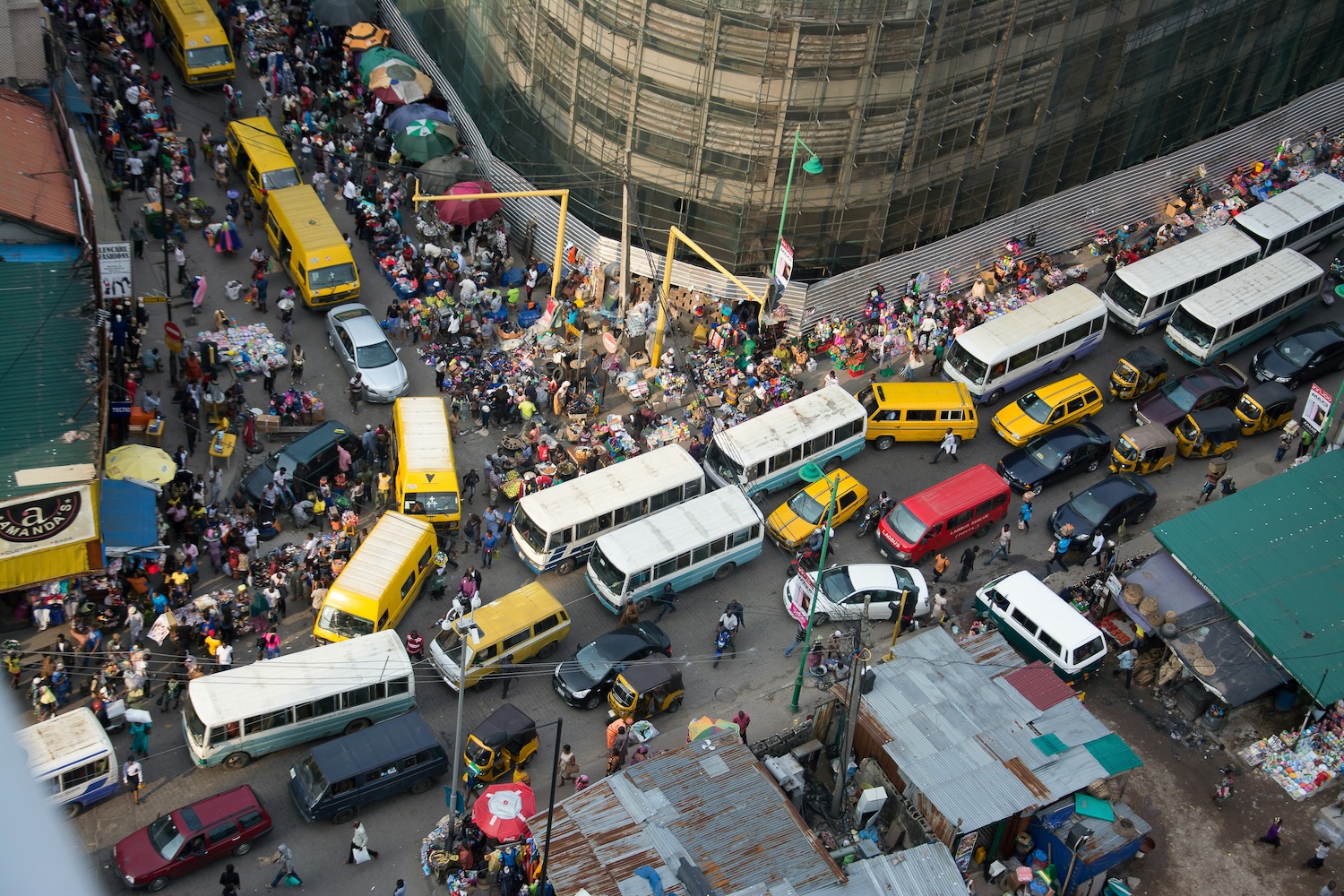
Tag: Ghana

  • 10 Things to Know Before You Import a Car into Ghana in 2026

    10 Things to Know Before You Import a Car into Ghana in 2026

    Importing a vehicle into Ghana is a structured process — but it’s a process where the cost of mistakes is real money. Many first-time importers calculate their landed cost using the auction price plus a rough estimate of duty, only to discover at the port that the actual duty bill, the over-age penalty, the documentation fees, and the clearing-side surprises have eaten 60% of what they thought they were paying for.

    This is the no-fluff list of 10 things you need to know before committing money to a Ghana vehicle import in 2026 — the items that veteran importers internalised years ago and that every new importer learns the hard way.

    Vehicles arriving at port
    The 10 essentials below are the difference between an import that works profitably and one that quietly bleeds margin

    1. Auction Price Is Roughly 60% of Total Landed Cost

    The single most common mistake among new importers is assuming the auction or buy-it-now price represents most of what they’re going to pay. It doesn’t.

    For a typical vehicle imported into Ghana from China, Japan, the US, or Europe, the auction or purchase price typically lands between 55% and 65% of total landed cost. The remaining 35–45% is some combination of buyer’s premium, source-country export documentation, ocean freight, marine insurance, Ghanaian customs duty and taxes, port handling, clearing fees, and inland delivery.

    If you’re modelling margin against auction price, you’re modelling against a fraction of what you’re actually committing to.

    2. The 10-Year Age Rule Has Sharp Teeth

    Ghana enforces a 10-year vehicle age rule, calculated from the year of manufacture. Vehicles older than 10 years face a stiff over-age penalty that can effectively double the import duty payment.

    For 2026 imports, this means:

    • A 2016 model year vehicle is the oldest you can practically import without penalty
    • A 2015 or earlier vehicle should generally be avoided unless the math works even with the penalty
    • Vehicles right at the cutoff need careful timing — manufacture date matters, and shipping delays can push you over

    The pattern that works best in 2026: source vehicles 0–5 years old. The price advantage of older vehicles is more than wiped out by the penalty when they tip past 10 years.

    3. Duty Is Calculated on Assessed Value, Not What You Paid

    Ghanaian customs assess each imported vehicle against an internal valuation. If you bought the vehicle for less than the assessed value, you’re still paying duty on the higher number. If you bought it for more than the assessed value, you’re paying duty on the lower number.

    In 2026, with VIN-based valuation systems increasingly common, assessed values are typically close to fair market value. The practical implication: don’t budget duty against your purchase price. Budget against the realistic market value.

    4. Port Handling and Clearing Fees Are Real

    Beyond duty itself, you’ll pay:

    • Port handling fees
    • Clearing agent fees (typically $400–$700 per vehicle in 2026)
    • Examination fees
    • Demurrage if your vehicle sits at port awaiting clearing

    Demurrage in particular catches new importers. A vehicle that sits 14 extra days at port — perhaps because documentation wasn’t ready, or your clearing agent was slow — can rack up demurrage charges that meaningfully eat your margin.

    Container port operations
    The clearing-side process matters more than most new importers realise — every day at the port costs money

    5. Documentation Has to Be Complete and Specific

    Ghanaian customs requires a specific documentation set for vehicle imports:

    • Bill of Lading (BL)
    • Commercial Invoice
    • Packing List (where applicable)
    • Title or equivalent ownership document
    • Source-country export certificate
    • Ghana Customs declaration
    • Tax Identification Number (TIN) for the importer
    • Other supporting documents depending on vehicle type and origin

    Missing or incorrect documentation is one of the most common sources of port delays — and demurrage cost. The discipline of getting documentation right at source pays back many times over at the port.

    6. Tema Is Faster Than Takoradi for Most Imports

    Most vehicle imports come through Tema port. Takoradi can work but is generally slower and less efficient for vehicle clearing. For first-time importers, Tema is the safer choice unless you have a specific reason to use Takoradi.

    7. Your Clearing Agent Matters More Than the Source

    A great vehicle from a great source can still go badly if your clearing agent isn’t competent. The clearing process touches multiple government agencies, requires constant follow-up, and rewards relationships built over years of operation.

    For new importers, working with an established clearing partner — or a full-service import platform that includes clearing — is meaningfully safer than trying to negotiate with random clearing agents at the port.

    8. New Imports From China Often Beat Used Imports From Elsewhere

    The maths that surprises many new importers in 2026: a brand-new vehicle imported directly from China through a structured platform like Autoimport Africa often lands in Ghana at a competitive price compared to a 4–6 year-old used Toyota or Hyundai imported via Japan or the US.

    Why? Chinese manufacturing prices are structurally lower, the consolidated shipping reduces per-unit cost, the vehicle has zero history (no inspection-discovered surprises), and the duty calculation on a new vehicle is straightforward without age-penalty complications.

    For first-time importers especially, this can be the most rational starting point.

    9. Currency Risk Is Real, and It’s Not Just Cedi-Dollar

    If you’re paying for the vehicle in USD or CNY and your costs in Ghana are in cedis, every week between order and final payment exposes you to currency movement. A 5% cedi depreciation between order and clearing can wipe out your target margin.

    Effective importers either lock currency forward, structure payments in tranches, or work with import partners who quote final landed cost in cedis upfront — eliminating the currency risk entirely.

    10. Resale Market Conditions Change Faster Than Import Cycles

    By the time your vehicle clears port, the market you planned to sell into may look different from the market you planned for at order time. Buyer preferences shift, fuel prices move, and competing supply arrives.

    The dealers who consistently win in Ghana plan their imports against expected market conditions 3 months out — not current conditions at order time. That requires staying close to the market and being willing to adjust source selections based on shifts in demand.

    How Autoimport Africa Removes Most of These Concerns

    The 10 items above are why Autoimport Africa exists. We handle the supply chain end-to-end: vehicle sourcing in China, third-party inspection, export documentation, consolidated shipping, customs clearing in Ghana, and final delivery. Our quotes are denominated in cedis upfront, eliminating currency risk. Our clearing partners are established veterans who minimise demurrage exposure. Our inventory focuses on new and lightly-used Chinese vehicles that fall well within the age rule and deliver competitive landed cost.

    For first-time importers and scaling dealers, this means most of the 10 concerns above become someone else’s problem (ours). You choose the vehicle. We deliver it.

    The Bottom Line

    The cost of importing a vehicle into Ghana in 2026 isn’t just the auction price. It’s the auction price plus 35–45% in duties, fees, freight, and clearing — plus the cost of every mistake along the way that catches first-time importers. The 10 essentials above are the working knowledge that experienced importers internalised years ago.

    Talk to Autoimport Africa about your next import. We’ll give you the transparent landed cost up front, in cedis, with the clearing already pre-arranged.


  • The Best Cars for Ghana’s Roads: A 2026 Buyer’s Guide That Actually Tells the Truth

    The Best Cars for Ghana’s Roads: A 2026 Buyer’s Guide That Actually Tells the Truth

    Ghanaian roads in 2026 still test vehicles in ways that smoother European or Asian markets simply don’t. Potholes that haven’t been repaired in three years, washboard sections on the way to Kumasi, urban gridlock in Accra, dusty rural cuts heading north toward Tamale — every drive is a stress test. The right vehicle handles all of that without complaint. The wrong one becomes a parts and labour bill that never stops.

    This is the buyer’s guide for Ghanaian drivers in 2026 who want a vehicle that genuinely survives Ghanaian conditions — not one that looked good on a European motorway test drive and quietly fell apart in Accra.

    A capable vehicle on a West African road
    The vehicles that thrive in Ghana share a few specific qualities — ground clearance, simple maintenance, and parts availability all matter more than badge prestige

    What Makes a Vehicle “Right” for Ghanaian Roads

    Before getting to specific models, it’s worth being honest about the criteria that actually matter:

    Ground clearance. A minimum of 170 mm. Lower than that and you’re inviting damage on rural sections and during the rainy season.

    Suspension robustness. Bushings, links, and shocks all take more abuse here. Vehicles known for soft, comfort-tuned suspension fail faster than those with more robust setups.

    Engine reliability under heat. Cooling systems take a beating in stop-start Accra traffic. Engines designed for European cool-climate cycling can struggle with the duty cycle Ghanaian driving imposes.

    Parts availability. A vehicle no mechanic in your area can service is a liability regardless of its specifications. The local parts and skills ecosystem matters as much as the vehicle itself.

    Fuel efficiency under load. With petrol prices what they are, a thirsty vehicle eats your budget month after month. Hybrid and PHEV options have changed this calculation significantly in 2026.

    The Vehicles That Actually Hold Up

    Toyota RAV4 (2019-onward). Still the default sensible answer for a Ghanaian SUV buyer, and there’s a reason. Strong ground clearance, robust suspension, parts available everywhere, and the hybrid variant returns 16+ km/L in mixed driving. The hybrid AWD is particularly suited to mixed urban/rural use cases.

    Toyota Hilux. The undisputed champion of “I need a vehicle that won’t quit”. Built for harsh use, mechanically simple to service, and extraordinary resale value. If your work involves anything off-road or any heavy-duty load carrying, the Hilux is hard to beat.

    Hyundai Tucson (NX4 generation). Modern, well-equipped, more interesting to drive than a RAV4, and increasingly common in Ghanaian dealer inventory. The hybrid variant matches the RAV4 hybrid on real-world economy.

    Honda CR-V (2017-onward). Quieter, smoother, and more comfortable than most rivals, with excellent reliability data. The 1.5L turbo engine is more economical than its capacity suggests. Watch for the 2017–2019 Earth Dreams 1.5L oil-dilution issue if buying used; later models corrected it.

    BYD Song Plus DM-i (PHEV). The newest entry on this list, and increasingly the smartest. As a plug-in hybrid SUV, it offers 60+ km of pure electric range plus efficient hybrid operation, with running costs that significantly undercut every other vehicle on this list. Direct-imported through Autoimport Africa, the landed price is competitive with used Japanese rivals.

    Geely Coolray / Atlas Pro. Compact and mid-size SUV options from Geely (which owns Volvo) that have rapidly built reputations in African markets for solid build quality, modern equipment, and aggressive pricing. Both the Coolray and Atlas Pro are well-suited to Ghanaian conditions.

    Toyota Corolla (recent generations). If you don’t need an SUV, the Corolla remains the rational sedan choice for Ghana — exceptional reliability, parts everywhere, and reasonable fuel economy. The hybrid variant from 2019 onward is the standout pick.

    Driving conditions on a West African road
    The right vehicle for Ghanaian roads isn’t always the most expensive one — it’s the one with the best balance of reliability, ground clearance, and parts ecosystem

    What to Avoid (and Why)

    A few categories of vehicle consistently underperform in Ghanaian conditions:

    Lowered or sport-tuned suspension models. Vehicles designed for European motorway driving with stiffer, lower suspension setups suffer disproportionately on broken roads. The repair bill for replaced bushings, control arms, and shocks adds up fast.

    Older diesel cars without proper service history. Ghanaian diesel quality has improved, but it’s still tougher on diesel injection systems than European fuel. A diesel without documented filter and injector service history is a financial risk.

    Models with thin local parts ecosystems. Some European hatchbacks, certain American sedans, and niche models from less common brands fall into this category. Even reliable vehicles become expensive when parts have to be flown in.

    Vehicles with complex electronic systems and limited local diagnostic support. Modern vehicles increasingly rely on dealer-level diagnostic equipment for routine work. Choose models where local independent shops have the tools.

    The Direct Import Question

    A growing share of Ghanaian buyers in 2026 are recognising that the most reliable way to get a vehicle that genuinely fits Ghanaian conditions is to import it brand-new directly from China through a structured platform like Autoimport Africa.

    The reasoning is straightforward:

    • You start with a vehicle that has zero history — no accidents, no hidden flood damage, no rolled-back odometers
    • You can specify the exact trim and configuration suited to your use case
    • Modern Chinese vehicles (BYD, Geely, Chery) match or exceed Japanese rivals on equipment, technology, and warranty
    • The landed cost is often competitive with used Japanese vehicles of comparable condition

    This isn’t a knock against the used Toyota or Honda market — those vehicles still represent solid value for many buyers. It’s a recognition that the buying landscape in 2026 has more options than it did in 2020.

    Practical Buyer Checklist

    Before committing to any vehicle for Ghanaian use:

    • Check ground clearance — measure from a flat surface to the lowest point under the vehicle
    • Test the AC system in actual hot conditions, not just a cooled showroom
    • Drive over a section of broken road — the kind you actually drive on, not the smooth showroom approach
    • Confirm parts availability with two independent local mechanics, not just the seller
    • For used vehicles, get a pre-purchase inspection from a mechanic with no relationship to the seller
    • For new imports, confirm warranty coverage and authorised service availability in Ghana

    How Autoimport Africa Fits

    Autoimport Africa sources brand-new vehicles directly from verified Chinese suppliers and lands them in Ghana with full inspection reports, transparent cedi-denominated pricing, and end-to-end logistics. For buyers who want a vehicle genuinely fit for Ghanaian roads — without taking a chance on used-import history — it’s the cleanest path to the right outcome.

    The Bottom Line

    The vehicles that survive and thrive on Ghanaian roads in 2026 share consistent qualities: appropriate ground clearance, robust suspension, broad parts availability, and either Toyota-style mechanical simplicity or modern Chinese new-energy efficiency. The wrong vehicle is the one that looked great in Europe but quietly bleeds money in Accra.

    Talk to Autoimport Africa for a quote on any of the vehicles listed above, brand-new and imported direct. We’ll match the spec to your roads, not the other way around.

  • Financing Your First Car in Ghana: Should You Use Savings or Take a Loan?

    Financing Your First Car in Ghana: Should You Use Savings or Take a Loan?

    Buying your first car in Ghana — used or new — is rarely just a question of finding the vehicle. The bigger question is usually how you’re going to pay for it. Two main paths exist for first-time buyers in 2026: drawing down personal savings, or taking an auto loan. Each path has consequences that go well beyond the obvious “interest cost vs no interest cost” calculation.

    This guide walks through both options honestly, including the scenarios where each one wins, and finishes with a third option that more Ghanaian first-time buyers are quietly choosing in 2026.

    A young professional considering a vehicle purchase
    Your financing decision shapes the next three to five years of your financial life — it deserves more thought than most first-time buyers give it

    Option 1: Paying Cash from Savings

    The simplest financing model is also the most under-rated: pay the full price out of accumulated savings.

    The case for paying cash:

    • No interest cost — every cedi of the purchase goes into the asset itself
    • No monthly debt obligation — your future cash flow stays flexible
    • Stronger negotiating position — sellers prefer cash buyers and often discount accordingly
    • No risk of repossession if your income drops
    • You own the vehicle outright from day one

    The case against:

    • Drains your emergency reserves at exactly the time you have a new asset that may need repairs
    • Concentrates a significant share of your net worth in a depreciating asset
    • Means you delayed other investments for the months or years it took to save the full amount

    The honest assessment: paying cash is the right choice when you have a robust emergency fund after the purchase, when the vehicle is reasonably priced relative to your income, and when you’ve already maximised the higher-priority savings goals (retirement, business capital, family obligations).

    If buying the vehicle would leave you with less than three months of living expenses in reserve, paying cash is not the right call — even if you technically have the money.

    Option 2: Auto Loans in Ghana

    Ghanaian auto loans in 2026 typically run at 22–32% annual interest for tenures of 36 to 60 months. The exact rate depends on your bank, your income profile, the size of your down payment, and whether the lender categorises the vehicle as new, used-imported, or used-local.

    The case for taking a loan:

    • Preserves your savings and emergency reserves
    • Lets you buy a more reliable, newer vehicle than you could afford in cash
    • Builds credit history with formal financial institutions
    • Spreads the cost across the period when you’re actually using the vehicle

    The case against:

    • Total interest cost over a 4-year loan can easily reach 40–60% of the loan amount
    • Monthly payments lock up cash flow that could otherwise go to savings or investment
    • If your income drops, you’re exposed to repossession risk
    • Insurance premiums are typically higher for financed vehicles
    • Some lenders bundle expensive add-ons (extended warranties, GAP insurance) into the loan

    A real example: a ₵120,000 used vehicle financed over 48 months at 26% annual interest will cost roughly ₵204,000 in total — meaning ₵84,000 of pure interest. Whether that’s worth it depends entirely on what you’d do with the ₵120,000 if you didn’t spend it on the car.

    A buyer reviewing financial details
    The numbers on a loan agreement matter more than the vehicle on the lot — run the maths before signing

    The Hybrid Approach: Down Payment Plus Short-Term Loan

    Many Ghanaian first-time buyers in 2026 land in the middle: they pay 40–60% of the purchase price as a down payment from savings and finance the remainder over a shorter tenure (24–36 months).

    This approach has several advantages:

    • Reduces total interest cost dramatically
    • Keeps monthly payments manageable
    • Lets you preserve at least some emergency reserves
    • Builds credit history without dragging on for five years

    The risk is the same as any financing: if your income drops, you still have an obligation. But for buyers with stable employment or established business income, the hybrid approach often delivers the best risk-adjusted outcome.

    Three Questions That Decide the Right Choice for You

    Honest answers to these three questions will tell you which financing path fits your situation:

    1. After buying the vehicle, will I still have at least 3 months of living expenses in reserve?
    If yes, paying cash is on the table. If no, financing — even partial financing — is probably necessary.

    2. Is my monthly income stable enough that I can comfortably cover a fixed loan payment for the full tenure?
    If yes, a loan can be a sensible tool. If no — particularly if you’re self-employed or in a volatile sector — financing introduces risk that may outweigh the cash-flow benefit.

    3. Could I deploy the cash I’d otherwise use into a higher-return opportunity (business expansion, education, real estate)?
    If yes, financing the vehicle and keeping the cash productive elsewhere is rationally sound. If the cash would just sit, paying for the vehicle is fine.

    The Third Option Most First-Time Buyers Don’t Consider

    A growing share of Ghanaian first-time buyers in 2026 are skipping the local used-car decision entirely and importing a brand-new vehicle directly from China through Autoimport Africa.

    The financial picture often looks like this:

    • The landed cost of a new BYD, Chery, or Geely vehicle imported direct is competitive with — sometimes lower than — the price of a 4–6 year-old used Toyota or Honda from a Tema dealer
    • The new vehicle has zero accident history, zero hidden mechanical issues, and a full manufacturer warranty
    • Maintenance costs in years 1–3 are dramatically lower (no surprise repairs)
    • Resale value 3 years later is comparable or better, since the vehicle starts younger

    For a first-time buyer who’s planning to keep the vehicle for 4–6 years, the new-import option often wins on total cost of ownership — even when financed — compared to a used local purchase.

    How Autoimport Africa Supports First-Time Buyers

    Autoimport Africa works with Ghanaian buyers across both pure-cash and financed scenarios. We provide transparent landed-cost quotes in cedis upfront — no surprises after shipping — and partner with local financial institutions that can structure auto financing specifically for direct imports. That means a first-time buyer can structure the purchase like any traditional dealer financing, but get a brand-new vehicle instead of an older used one.

    The Bottom Line

    The cash-vs-loan decision for first-time buyers in Ghana isn’t actually about cash vs loan. It’s about the bigger question of what total cost of ownership you’ll be exposed to over the next 4–6 years, and how much of your future cash flow you’re willing to commit to a depreciating asset.

    The cleanest financial path is often: pay cash if you can do so without depleting your emergency reserves, and consider direct import as a way to make your savings stretch further than they would on a local used car. If financing is necessary, keep the tenure short and the down payment high.

    Talk to Autoimport Africa for a transparent landed-cost quote on any new Chinese model. Once you have the real number — not a rough estimate — your financing decision becomes much easier.

  • How to Import Vehicles from China to Africa in 2026: The Complete Working Guide

    <![CDATA[The volume of Chinese vehicles arriving in African ports has quietly become one of the most significant shifts in the continent's automotive landscape. Five years ago, the dominant import flow into Lagos, Tema, and Mombasa was Japanese and European used cars sourced through Dubai, the UK, and the United States. In 2026, China is competing aggressively with all of them — and winning many of the comparisons.

    This is a working guide for African dealers and individual importers who want to understand how Chinese vehicle imports work in 2026: the supply chain, the country-specific rules, the costs, and the strategies that actually deliver landed inventory at competitive prices.

    Asian commercial port and skyline
    The supply chain that connects Chinese factories and auctions to African ports has matured rapidly — what required specialist knowledge five years ago is now a structured process

    Why China, and Why Now

    Three structural shifts have made China the primary growth source for African vehicle imports:

    1. Domestic supply abundance. China is now the world’s largest vehicle producer. Inventory turnover at Chinese auction platforms is enormous, with thousands of vehicles changing hands daily. That depth of supply means African buyers can specify exact trims, colours, and conditions with realistic chances of finding what they want.

    2. Quality has crossed the credibility threshold. BYD, Geely, Chery, Great Wall, and others now produce vehicles that compete directly with Toyota, Hyundai, and Volkswagen on quality, equipment, and reliability. The “Chinese car” stigma that lingered until the early 2020s is now mostly outdated.

    3. Price advantage at scale. Chinese new vehicles cost less than comparable Japanese or Korean equivalents — sometimes dramatically less. Used Chinese vehicles, particularly fleet-removed and lease-return inventory, are even more aggressively priced.

    For African dealers operating on margin compression and individual importers stretched by foreign exchange volatility, those three factors combine to make Chinese sourcing the rational default in 2026.

    The Sourcing Process: Step by Step

    A clean, modern Chinese-to-Africa import follows roughly this sequence:

    Step 1: Vehicle selection. Browse inventory on a verified platform — either a Chinese auction marketplace or a curated supplier like Autoimport Africa. Filter by make, model, year, mileage, and condition grade. The best platforms include 200- to 300-point third-party inspection reports.

    Step 2: Bid or buy. Some inventory is auction-only (sealed-bid or live), some is buy-it-now. Auctions reward disciplined bidding; buy-it-now offers price certainty.

    Step 3: Payment and procurement. Funds are transferred (typically USD or CNY) and the vehicle is procured by the supplier. A reputable supplier handles the Chinese-side documentation, including export certificate of title and customs paperwork.

    Step 4: Ocean freight. The vehicle is consolidated with other shipments — usually three to four vehicles per 40-foot container — and shipped by sea to the destination African port. Transit time from Shanghai to Lagos is typically 35–45 days; to Tema, 38–48 days; to Mombasa, 25–35 days.

    Step 5: Arrival and customs clearing. The destination-side clearing agent receives the vehicle, files customs documentation, pays the applicable duties and taxes, and arranges release.

    Step 6: Local delivery. The vehicle is transported from the port to the buyer’s address — or, for dealers, to their forecourt or warehouse.

    End to end, the timeline from order placement to delivery in Lagos or Accra is typically 8–12 weeks.

    Aerial view of urban traffic
    The vehicles that move through this supply chain land on Lagos, Accra, and Nairobi roads within 8–12 weeks of order placement

    Country-Specific Rules You Need to Know

    Customs and import regulations differ meaningfully between African markets. The big three for 2026 imports:

    Nigeria. The 2026 Fiscal Policy Measures reduced import tariffs on fully built passenger vehicles from 70% to 40%. Combined with VAT (7.5%) and a few smaller levies, the effective duty load on a passenger vehicle landed in Lagos is now in the mid-50% range — meaningfully better than 2024 conditions. Vehicles older than 12 years are increasingly restricted under End-of-Life Vehicle certification rules.

    Ghana. Vehicles older than 10 years are subject to a stiff over-age penalty that can effectively double the duty. New and near-new imports avoid this penalty entirely, which is why direct imports of recent Chinese inventory through platforms like Autoimport Africa are increasingly economic compared to older used imports from other regions.

    Kenya. The 8-year age rule is strictly enforced — vehicles must be no more than 8 years from the year of first registration. Excise duty, import duty, VAT, IDF fee, and Railway Development Levy combine to a meaningful total. The good news: Chinese new and lightly-used inventory falls well within the 8-year window with room to spare.

    Other markets: Côte d’Ivoire, Senegal, Cameroon, Tanzania, Rwanda, and Uganda all have specific rule sets. The pattern is consistent: newer vehicles attract lower effective duty, age penalties have been tightening over the past five years, and the regulatory environment increasingly favours quality imports over high-mileage older inventory.

    Cost Structure: What Actually Goes Into Landed Cost

    The hammer price or buy-it-now price of a Chinese vehicle is roughly 55–70% of the total landed cost for the African importer. The remaining 30–45% breaks down approximately as:

    • Buyer’s premium and platform fees: 5–8% of vehicle price
    • Chinese-side export documentation and inland transport: 2–4% of vehicle price
    • Ocean freight (consolidated): typically $800–$1,400 per vehicle for a 40-foot consolidation
    • Marine insurance: 1–2% of vehicle value
    • Customs duty and taxes: varies by country (Nigeria ~50–55% currently, Ghana ~35–50% depending on age, Kenya ~25–35%)
    • Clearing agent fees: typically $300–$600 per vehicle
    • Inland delivery: varies, typically $150–$400 within capital cities

    Understanding this breakdown matters because dealers who plan margin against hammer price rather than landed cost consistently lose money on imports. The discipline of working from full landed cost backward is what separates profitable importers from frustrated ones.

    Common Pitfalls to Avoid

    The repeat mistakes that catch new importers, year after year:

    Skipping inspection reports. A Chinese auction vehicle without a third-party inspection report is a gamble. Almost every “I lost money on a Chinese import” story traces back to this single shortcut.

    Assuming Japanese-export logistics apply. The infrastructure for Japan-to-Africa shipping has been mature for 30 years. China-to-Africa is newer, has different documentation requirements, and rewards working with partners who have done it many times.

    Misjudging duty calculations. Duty in most African markets is calculated against an assessed value, not necessarily the price paid. Underestimating that gap can blow up your landed-cost model.

    Choosing models without local parts ecosystems. A clean Chinese SUV is great. A clean Chinese SUV that nobody in your city can service is a problem. Stick to models with established local parts pipelines, or work with a supplier who can support parts sourcing on an ongoing basis.

    How Autoimport Africa Fits

    The whole point of Autoimport Africa is to remove the operational complexity that has historically made Chinese-to-Africa imports an expert-level activity. We curate verified inventory from Chinese suppliers, run third-party inspections, handle export documentation, consolidate shipping, manage customs clearing in Nigeria, Ghana, and Kenya, and deliver to your address.

    The buyer’s job is to choose the vehicle. The importer’s job — ours — is to deliver it.

    The Bottom Line

    Importing used and new vehicles from China to Africa in 2026 is no longer the specialist activity it was five years ago. The supply is deep, the quality is competitive, the prices are favourable, and the logistics infrastructure has matured. What separates importers who win from importers who struggle is whether they work with the right partner — one with real China-side relationships, real inspection partnerships, and real customs clearing capacity in your destination country.

    If you’re importing into Nigeria, Ghana, Kenya, or another African market and you’d like to skip the trial-and-error phase, talk to Autoimport Africa. We’ve already done the hard work — your job is just to choose the vehicle.]]>

  • 5 Costly Mistakes First-Time Car Buyers in Ghana Keep Making (And How to Skip All of Them)

    <![CDATA[Buying your first car in Accra, Kumasi, or anywhere else in Ghana is one of the most expensive mistakes-or-wins of a young adult's financial life. Get it right and you've got reliable transport, a maintained asset, and the foundation for serious mobility. Get it wrong and you spend the next three years pouring money into a vehicle that should have been someone else's problem.

    The patterns are predictable. Almost every first-time buyer in Ghana makes a version of the same five mistakes — and almost every one of those mistakes can be avoided with a little upfront discipline.

    A first-time car buyer in West Africa
    The first car you buy sets the financial pattern for the next decade — getting it right matters more than most people realise

    Mistake #1: Falling in Love with the Look Before Checking the Numbers

    You see a clean Honda Accord on a dealer’s lot in Tema. The body’s straight, the paint shines, the price is “negotiable”. Three weeks later, you’ve signed and paid — and discovered that the AC compressor is dying, the gearbox needs work, and the fuel consumption is double what you budgeted for.

    The fix: price the total cost of ownership, not the sticker price. A reasonable first-car budget should account for the purchase price plus at least 15–25% over the first year for maintenance, repairs, and parts. If a vehicle is at the top of your purchase budget, you don’t actually have a budget for ownership.

    Mistake #2: Skipping the Independent Mechanic Inspection

    This is the most common and most damaging mistake on the list. The dealer’s mechanic is not your mechanic. The seller’s “trusted technician” is not your technician. Any vehicle you’re considering needs a pre-purchase inspection from someone whose only loyalty is to your wallet.

    A proper Ghana pre-purchase inspection for ₵400–₵800 will catch:

    • Frame and chassis damage hidden by paint
    • Flood-damage indicators (mud in unusual places, electrical corrosion, musty smells)
    • Engine compression problems
    • Transmission issues developing under the surface
    • Odometer rollback (verifiable through service records and wear patterns)

    If the seller refuses to allow an independent inspection, walk. That refusal is itself the answer to whatever question you were going to ask the inspector.

    Mistake #3: Trusting Local Used Cars Without Verifying History

    The Ghanaian used car market is full of vehicles with stories. Imported as accident-damaged from the US or Europe, repaired in coastal yards, and resold inland with the previous history quietly forgotten. Some of these repairs are honest and well done. Many are not.

    The reliable way to verify a used vehicle’s history depends on its origin:

    • US-imported: Pay for a Carfax or AutoCheck report using the VIN. Worth every cedi.
    • Europe-imported: Check the VIN against UK or German vehicle records. Service stamps in the maintenance book matter.
    • Japan-imported: Auction sheets are available for most Japanese auction vehicles and reveal the original condition grade.

    If a seller can’t or won’t provide history documentation, treat the vehicle as if it has the worst plausible history. Most of the time, you’ll be right.

    Buyer inspecting a vehicle
    The five minutes you spend on a vehicle inspection are worth more than the five hours you spend negotiating price

    Mistake #4: Comparing Home-Used vs Imported Without Doing the Maths

    “Home-used” vehicles in Ghana have a reputation for being less abused than imports. Sometimes that’s true. Often it’s not. The decision shouldn’t be based on the label — it should be based on the condition of the specific vehicle in front of you.

    What actually matters:

    How was the vehicle maintained? A home-used vehicle with a service-book history beats an import every time. An import with documented service history beats a home-used vehicle without records every time.

    What’s the resale market for that exact model? Some imports hold value better than home-used equivalents because parts are easier to source and buyers trust the original equipment. Others depreciate faster because they’re rarer and harder to service locally.

    What’s the parts ecosystem? A Toyota Corolla — home-used or imported — has parts available in every major Ghanaian city. A specific European hatchback you’ve never heard of may not. Match your purchase to your local parts reality.

    Mistake #5: Ignoring Total Import Cost When Considering Direct Imports

    For many first-time buyers, importing a brand-new or near-new vehicle directly from China through a platform like Autoimport Africa works out to less per cedi than buying a used local vehicle of comparable quality. But many buyers never run the numbers because they assume direct import is “for businesses” or “too complicated”.

    The reality in 2026:

    • A new BYD Dolphin sedan or SUV imported through Autoimport Africa typically lands in Accra at a competitive price compared to a 4–6 year-old used Toyota or Hyundai of similar size
    • The brand-new vehicle has zero accident history, zero hidden damage, and a full manufacturer warranty
    • The financing options for direct imports have improved significantly — many buyers structure imports against savings plus a short-term loan

    The numbers won’t work for every buyer. But running them at least once before defaulting to a used local purchase is the discipline that separates buyers who finish ahead from buyers who don’t.

    The Smart Way to Avoid All Five Mistakes

    The pattern across all five mistakes is the same: under-investing in research and verification before committing money. The fix is the same too: spend more time and a little more money upfront, save a lot of both later.

    For first-time buyers in Ghana who want to skip the local-used-car gamble entirely, Autoimport Africa offers a clean alternative. Brand-new vehicles imported directly from China, with verified specifications, transparent landed-cost pricing in cedis, and full handling from order to delivery in Accra. No accident histories to verify because the vehicles have no histories. No mechanic-inspection roulette because the vehicles are new.

    The Bottom Line

    The first car you buy in Ghana doesn’t have to be the financial mistake that everyone warns you about. The buyers who get it right are the ones who treat the purchase like a project: budget properly, inspect rigorously, verify history, compare options on the maths rather than the label, and consider direct import as a serious alternative rather than dismissing it.

    Talk to Autoimport Africa if you’d like to skip the gamble entirely. We’ll quote a brand-new vehicle landed in Accra against any used vehicle you’re considering, and let the numbers speak.]]>