Tag: Chery

  • 10 Best Used Cars to Source in 2026: A Working Dealer’s Sourcing Guide

    10 Best Used Cars to Source in 2026: A Working Dealer’s Sourcing Guide

    For dealers building 2026 inventory plans, the question isn’t just which vehicles will sell — it’s which vehicles will sell quickly, at strong margins, and without tying up capital in inventory that ages on the lot. The 10 models below have emerged as the volume-and-margin sweet spots for African dealers sourcing through global supply chains in 2026.

    This is the working dealer’s sourcing list, organised around the models that combine consistent demand, healthy margin potential, and reliable supply. Each entry includes why it works and what to watch when sourcing.

    Vehicles on a busy African street
    The 10 models below are the volume-and-margin sweet spots for African dealers in 2026 — consistent demand, healthy supply, and reliable economics

    1. Audi A3

    The A3 remains a strong volume performer in 2026 for one specific reason: it gives buyers entry-level Audi prestige at a price point that’s competitive with mid-range Hyundai or Toyota models. For dealers, the A3 turns over fast, particularly the recent fourth generation (2020-onward).

    Sourcing watch: Diesel variants still attract premium pricing in markets that haven’t shifted to petrol-default. Hatchback and Sportback configurations both move well; sedan variants slightly slower in African markets.

    2. Volkswagen Tharu

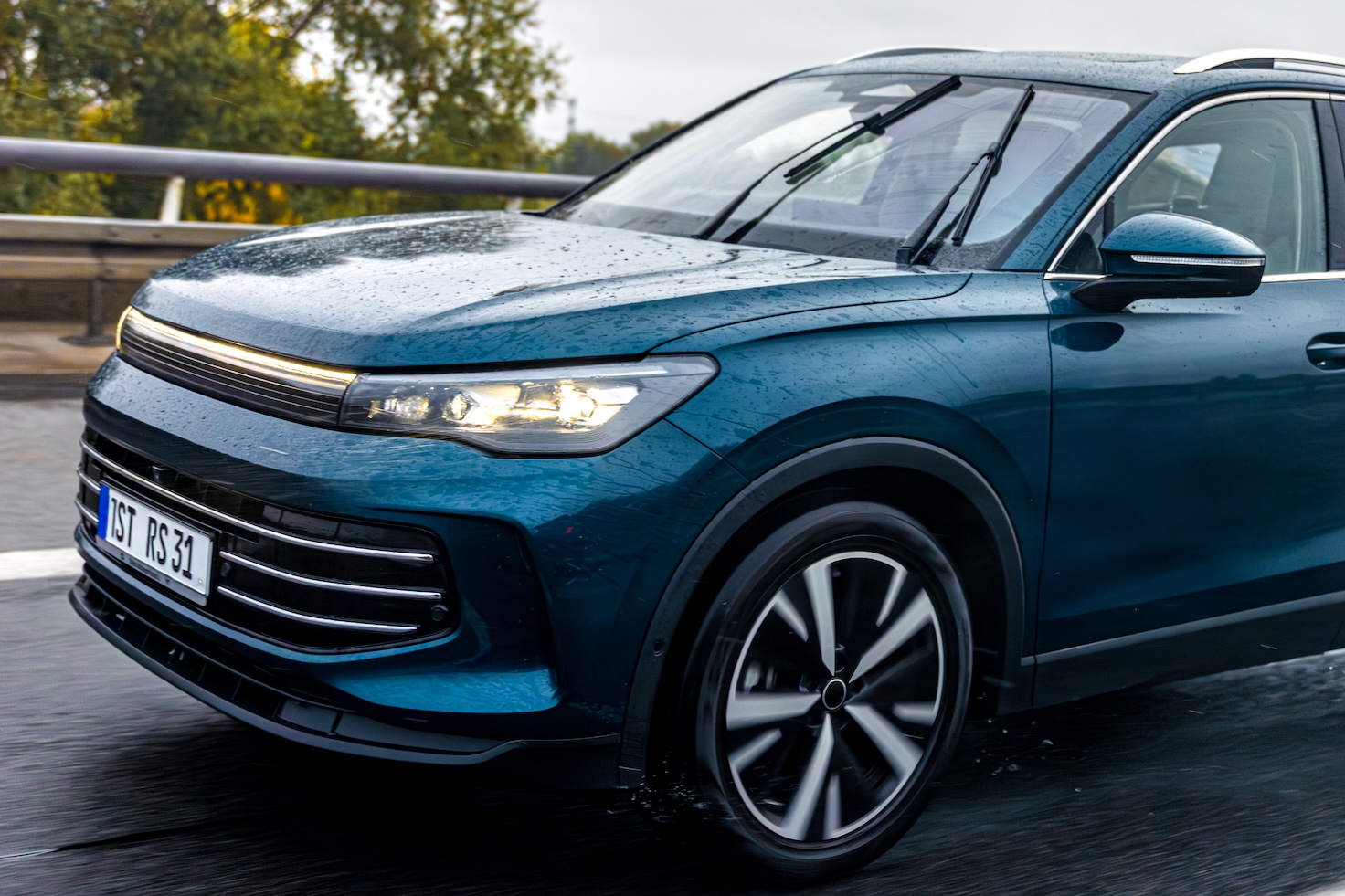
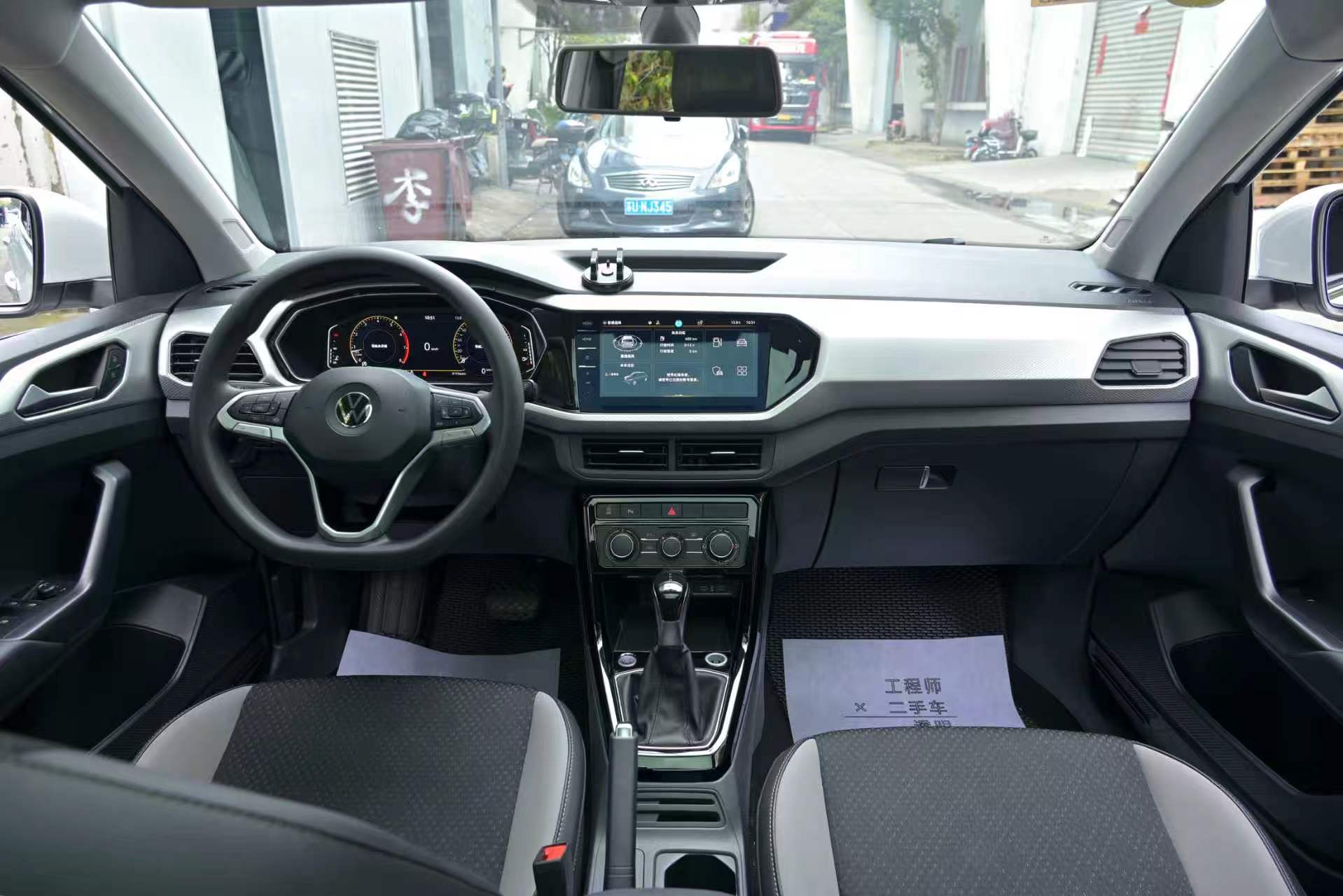
    The Tharu is a China-market-specific Volkswagen SUV that has become a strong export candidate for African dealers in 2026. Built on the MQB platform, well-equipped, and priced significantly below equivalent European-spec Tiguan models. Strong consumer recognition of the Volkswagen badge plus aggressive pricing makes for fast turnover.

    Sourcing watch: Verify that any Tharu being sourced has been spec’d for export (right-hand-drive markets in Kenya/Uganda or left-hand-drive markets across most of West Africa).

    3. Toyota RAV4

    The RAV4 needs no introduction. The fifth-generation model (2019-onward) is the volume sweet spot, and the hybrid variant carries a particular premium in 2026 as fuel costs push buyers toward efficient powertrains.

    Sourcing watch: Hybrid variants command 15–20% price premiums in resale markets and absolutely justify the higher source-side cost. Pre-2019 RAV4s are increasingly less attractive as the market has moved on.

    4. BMW X1

    The X1 is the entry-level X-series gateway and a consistent volume performer for African dealers. The third generation (2022-onward) is well-equipped and offers premium positioning at a price that’s accessible relative to the X3 or X5.

    Sourcing watch: sDrive (front-wheel-drive) and xDrive (all-wheel-drive) variants both sell, but xDrive commands a meaningful premium in markets with poor road conditions.

    5. BYD Song Plus DM-i

    The standout Chinese new-energy entry on the dealer list. The Song Plus DM-i (Dual-Mode intelligent) plug-in hybrid SUV has become one of the fastest-moving inventory items globally in 2026. Strong consumer interest in the BYD brand combined with genuinely competitive equipment at sub-Toyota pricing creates ideal volume conditions.

    Sourcing watch: Demand has outstripped supply at certain points in 2026. Dealers who establish reliable supply relationships through partners like Autoimport Africa get priority allocation.
    Premium vehicle in showroom condition
    The dealer’s sourcing edge in 2026 is the combination of established models with the rising Chinese new-energy entries

    6. Honda CR-V

    The CR-V remains a reliable mid-volume performer. The fifth and sixth generations both move steadily, with the hybrid variant of the sixth generation commanding particular interest in 2026.

    Sourcing watch: The 2017–2019 1.5L turbo oil-dilution issue affected CR-Vs of those years. Verify model year carefully and price accordingly.

    7. Mercedes-Benz C-Class

    The C-Class is the entry into Mercedes prestige and continues to support strong dealer margins in 2026. The W205 generation (2014–2021) is the volume zone — well-priced at source and commanding meaningful premiums at retail.

    Sourcing watch: AMG-branded variants (C43, C63) carry significantly higher source-side costs but also significantly higher retail premiums. The maths usually works for dealers with appropriate buyer pipelines.

    8. Chery Tiggo 7 Pro

    The Tiggo 7 Pro has become Chery’s volume leader in African export markets. Mid-size SUV with premium-grade interior, well-equipped at competitive prices, and increasingly recognised by African consumers.

    Sourcing watch: The Tiggo 7 Pro Max (the higher-spec variant) commands meaningful premiums and sells faster than the standard Tiggo 7 Pro. Source the higher trim where possible.

    9. Geely Coolray

    The Coolray is Geely’s compact SUV and one of the strongest-performing Chinese SUVs in African dealer inventory in 2026. Stylish design, well-equipped interior, and competitive pricing combine for fast turnover.

    Sourcing watch: Available in multiple trim levels with significantly different equipment packages. The mid and high trims sell faster and at better margins than entry-level variants.

    10. Toyota Corolla (recent generations)

    The Corolla is the volume baseline of any African dealer’s inventory. Twelfth-generation models (2018-onward) move at near-constant velocity, with the hybrid variant commanding particular premiums in 2026.

    Sourcing watch: Cross Hybrid and Sedan Hybrid variants both move well. Pure petrol Corollas still sell but at lower margins than hybrid versions in 2026.

    Pattern Observations from the Top 10

    Several patterns emerge that should shape dealer sourcing decisions:

    Hybrid and PHEV demand has fundamentally shifted. Toyota RAV4 Hybrid, Toyota Corolla Hybrid, and BYD Song Plus DM-i all turn faster than equivalent pure-ICE inventory. Stocking decisions in 2026 should weight toward electrified powertrains where supply allows.

    Chinese brands are now mainstream sourcing priorities. BYD, Geely, and Chery occupy three positions in the top 10 — and their share of total inventory turnover continues to grow. Dealers who haven’t yet built reliable Chinese supply relationships are operating at a structural disadvantage.

    Premium German remains margin-dense. BMW X1, Mercedes C-Class, and Audi A3 all support healthy per-unit margins despite their pricing. The right buyer pipeline makes these consistently profitable.

    Volume vs margin trade-offs are real. Toyota RAV4 and Corolla deliver volume but moderate margin. Mercedes C-Class delivers margin but moderate volume. The optimal inventory mix combines both.

    Where Autoimport Africa Fits

    Autoimport Africa sources every model on this list directly from Chinese suppliers and through verified Chinese auction platforms, with end-to-end logistics into Nigeria, Ghana, Kenya, and other African markets. Our particular depth on Chinese inventory (BYD, Geely, Chery) gives African dealers reliable access to the fastest-growing segment of the global supply chain, while our broader network supports volume sourcing across Toyota, BMW, Mercedes, Audi, and other established brands.

    For dealers building 2026 inventory plans, working with Autoimport Africa removes the complexity of multi-channel sourcing and gives a single transparent view of landed cost across your full inventory mix.

    The Bottom Line

    The 2026 dealer’s top 10 — Audi A3, Volkswagen Tharu, Toyota RAV4, BMW X1, BYD Song Plus DM-i, Honda CR-V, Mercedes-Benz C-Class, Chery Tiggo 7 Pro, Geely Coolray, Toyota Corolla — combines established volume performers with the Chinese new-energy entries that have transformed the supply landscape. The dealers who source intentionally across this mix, through reliable partners, are the ones running profitable books in 2026.

    Talk to Autoimport Africa about scaling your inventory across all 10. We’ll quote landed cost on each, in your local currency, with the import already pre-arranged.

  • 5 Affordable High-Quality Chinese Cars Worth Importing to Algeria in 2026

    5 Affordable High-Quality Chinese Cars Worth Importing to Algeria in 2026

    For Algerian buyers comparing options in 2026, the most interesting category in the market isn’t the established Korean and European inventory — it’s the new wave of Chinese vehicles that combine genuinely competitive build quality with prices that meaningfully undercut traditional alternatives. Five models in particular have emerged as the value standouts for Algerian conditions.

    This guide covers what those five are, why each one works for Algeria specifically, and how the import maths actually plays out compared to local-dealer pricing.

    Modern vehicle on display
    Five Chinese models offer Algerian buyers the best blend of price, equipment, and build quality available in 2026

    1. BYD Song Plus DM-i (Plug-in Hybrid SUV)

    The Song Plus DM-i is the standout pick across most rational comparisons. It’s a mid-size plug-in hybrid SUV with 60+ km of pure electric range, efficient hybrid operation for longer journeys, and an interior and equipment package that competes directly with European premium SUVs.

    For Algerian conditions specifically:

    • The hybrid system delivers strong fuel economy regardless of charging access — 18+ km/L in petrol-hybrid mode
    • The interior is genuinely premium-grade — soft-touch materials, large screens, premium audio
    • The full ADAS suite (adaptive cruise, lane-keeping, blind-spot monitoring) comes as standard
    • The landed cost imported direct is meaningfully below local-dealer pricing for any equivalent European hybrid SUV

    For Algerian buyers prioritising long-term running cost, this is the best-priced option that doesn’t compromise on quality.

    2. Chery Tiggo 8 Pro (Mid-size 7-seat SUV)

    The Tiggo 8 Pro is the family-priority choice. Genuine 7-seat capability, strong 1.6L turbocharged petrol engine producing 187 hp, and an interior that punches well above its price.

    What works for Algeria:

    • The seven-seat configuration is suited to extended family use
    • The petrol engine is reliable and pairs well with a refined automatic gearbox
    • Build quality has improved substantially in recent generations — the 8 Pro is qualitatively different from earlier Chery vehicles
    • The price-to-equipment ratio dramatically undercuts equivalent Korean or Japanese 7-seat SUVs

    For families wanting genuine 7-seat capability without paying European or Japanese 7-seat prices, the Tiggo 8 Pro delivers.

    3. Geely Coolray (Compact SUV)

    The Coolray punches above its segment in equipment and design quality. Built on a platform that benefits from Geely’s ownership of Volvo, the Coolray feels structurally more solid than its compact-SUV class rivals.

    Strong points for Algerian use:

    • 1.5L turbocharged three-cylinder engine producing 177 hp — surprisingly muscular
    • Sport-tuned chassis that handles well on Algerian highway driving
    • Equipment package competitive with European compact SUVs at meaningfully lower prices
    • Increasingly common parts availability through Geely’s expanding service network

    The Coolray is the right choice for younger Algerian buyers who want a stylish, well-equipped compact SUV without paying European premium pricing.

    Modern electric vehicle charging
    The shift toward Chinese new-energy vehicles is reshaping Algerian buyer expectations — and the price-to-equipment maths is hard to argue with

    4. MG ZS (Compact SUV)

    The MG ZS — built by the SAIC group, with Chinese ownership of the once-British MG brand — has become one of the strongest value propositions in the compact SUV segment globally. Affordable, well-equipped, and supported by MG’s expanding global service network.

    For Algeria specifically:

    • Compact dimensions suited to urban driving in Algiers, Oran, and Constantine
    • Modern interior with reasonable infotainment and driver-assistance equipment
    • The MG warranty offer (often 7 years on direct imports) is genuinely class-leading
    • Pricing significantly undercuts equivalent compact SUVs from European or Korean brands

    For buyers wanting a small SUV without paying small-SUV-with-premium-badge pricing, the ZS is hard to beat.

    5. BYD Dolphin (Compact EV)

    The Dolphin is the entry that requires honest assessment of charging infrastructure access. For Algerian buyers in major cities with home charging available, the Dolphin’s economics are genuinely transformative — running costs roughly one-eighth of an equivalent petrol vehicle.

    What works:

    • ~400 km real-world range — sufficient for almost all daily Algerian driving
    • Compact dimensions ideal for city use
    • Modern interior with surprising space for the exterior footprint
    • Running costs that genuinely transform monthly transport spending

    The honest caveat: in Algerian cities and regions where home charging isn’t practical and public charging infrastructure is still developing, the Dolphin makes less sense. Match the vehicle to your charging reality.

    How the Cost Maths Works for Algeria

    Comparing these five Chinese vehicles to equivalent European or Japanese alternatives at local Algerian dealer prices, the consistent pattern in 2026 is:

    • Direct-import landed cost typically lands 50–70% of equivalent local-dealer pricing
    • Equipment levels are consistently equal or better at the lower price point
    • Build quality has crossed the credibility threshold — these are not the Chinese vehicles of 2015
    • Warranty coverage on direct imports is often longer than what local dealers offer on European vehicles

    The financial advantage of direct-import Chinese vehicles is structural, not promotional. It reflects China’s manufacturing scale efficiency and the elimination of multiple distribution layers between factory and end buyer.

    How to Import These Vehicles to Algeria

    For Algerian buyers wanting to access these models at direct-import pricing, the practical sequence is:

    Step 1: Choose your vehicle and request a transparent landed-cost quote from Autoimport Africa. The quote covers vehicle price, freight, insurance, customs duty, clearing, and delivery to Algeria.

    Step 2: Once accepted, the order is placed in China. The supplier procures the vehicle and prepares export documentation.

    Step 3: Vehicles ship via consolidated 40-foot containers, typically transit time 30–45 days from Shanghai or Tianjin to Algerian ports.

    Step 4: Customs clearing in Algeria is handled by experienced clearing partners. Duty and taxes are paid against the pre-quoted figure.

    Step 5: The vehicle is delivered to your address in Algiers, Oran, Constantine, or other Algerian cities.

    End-to-end, expect 8–12 weeks from order to delivery.

    Pitfalls to Avoid

    A few specific cautions for Algerian buyers considering Chinese imports:

    Don’t compare based on perception alone. If you haven’t driven a current-generation BYD, Geely, Chery, or MG, your impression of “Chinese cars” may be 5–7 years out of date. Drive the vehicles or read current independent reviews before deciding.

    Match the model to your service ecosystem. Some Chinese brands have established service networks in Algeria; others are still building. Choose models supported by either local service or by a supplier that backs ongoing parts availability.

    Verify warranty terms specific to direct imports. Manufacturer warranty terms on direct imports can differ from terms on locally-distributed vehicles. Confirm what coverage applies before ordering.

    The Bottom Line

    For Algerian buyers in 2026, five Chinese vehicles — BYD Song Plus DM-i, Chery Tiggo 8 Pro, Geely Coolray, MG ZS, and BYD Dolphin — collectively offer the best blend of price, equipment, and quality available in the market. The structural cost advantage of direct import means meaningfully better economics than any locally-distributed alternative.

    Talk to Autoimport Africa for transparent landed-cost quotes on any of these models — or any other Chinese vehicle — delivered to your address in Algeria.

  • The Top 10 Used Car Brands in 2026: A Dealer’s Sourcing Ranking

    The Top 10 Used Car Brands in 2026: A Dealer’s Sourcing Ranking

    The 2026 used vehicle market reflects a moment of genuine transition. Established Japanese and European brands still dominate volume in many markets, but Chinese brands have quietly moved from challengers to legitimate market leaders — and the pace of that shift is accelerating.

    This is the dealer-focused brand ranking for 2026, drawing on global transaction patterns, regional inventory turnover, and the markets that drive volume for African importers. The list isn’t a celebration of nostalgic favourites — it’s an honest read of which brands are actually moving in the global supply chain right now.

    Premium European sports car
    The 2026 brand ranking reflects a global market in transition — Chinese brands now compete for volume leadership alongside established European and Japanese names

    1. Volkswagen

    Still the global volume leader by a meaningful margin. Volkswagen’s strength in 2026 is the depth of its used inventory across multiple price tiers — from the entry-level Polo to the premium Touareg — and the brand’s parts ecosystem in Europe, Africa, and the Middle East. For dealers needing reliable mid-market inventory, Volkswagen remains the safest default.

    2. Toyota

    The reliability premium continues to power Toyota volume. The Corolla, RAV4, Camry, and Hilux move through the global supply chain at near-constant velocity. Toyota’s hybrid options have re-entered the demand picture aggressively in 2026 as fuel prices and emissions concerns push buyers toward efficient powertrains.

    3. BYD

    The most significant story in the 2026 ranking is BYD’s rise to third position globally. The world’s largest EV manufacturer has expanded aggressively into hybrid and ICE segments, dominated multiple emerging markets, and built a reputation for build quality that genuinely competes with Toyota. The Song Plus, Atto 3, Dolphin, and Han are all in the top tier of fastest-moving inventory globally.

    4. BMW

    The premium segment leader for the global used market in 2026. BMW’s inventory turnover is concentrated in the 3 Series, X1, X3, and X5 — vehicles that combine premium positioning with enough volume to remain accessible. African dealers continue to find strong margins on BMW imports, particularly the X-series SUVs.

    5. Audi

    Audi’s used inventory volume has held steady through 2026 despite increased competition from Chinese premium entries. The A3, A4, Q3, and Q5 are the volume drivers. The brand’s diesel options are still highly sought after in markets that haven’t shifted to petrol or electric defaults.

    Premium German automotive brand emblem
    Chinese brands now occupy multiple positions in the global top 10 — a structural shift that’s reshaping the global used car supply chain

    6. Geely

    Geely’s position in the top six reflects both its standalone brand strength and its ownership of Volvo, Lotus, and Lynk & Co. The Coolray, Atlas Pro, and Boyue have driven serious volume in emerging markets. The Volvo connection has lifted Geely’s perceived quality, and rightfully — many platforms are shared.

    7. Mercedes-Benz

    Mercedes’ position has slipped slightly from previous years as Chinese premium options gain ground, but the brand still anchors the high end of the used market. The C-Class and E-Class remain volume leaders; GLC and GLE drive the SUV side. African dealers selling Mercedes consistently command strong margins.

    8. Jetour

    Jetour — a relatively newer Chinese brand under Chery’s umbrella — has surged in 2026 by focusing on well-equipped SUVs at aggressive prices. The X70, X90, and Dashing models have driven serious volume in emerging markets. For dealers looking for inventory that moves quickly at competitive prices, Jetour is increasingly appearing on shortlists.

    9. Honda

    Honda’s position has been pressured by Chinese competition and by Toyota’s aggressive hybrid push, but the brand still sells well on reliability reputation. The Civic, CR-V, and Accord remain core volume drivers. The 2017–2019 1.5L turbo oil-dilution issue has now been clearly resolved on later models, but used-car buyers should still verify model year carefully.

    10. Chery

    Closing out the top 10 with Chery, whose Tiggo SUV range has captured significant share in markets across Africa, the Middle East, Latin America, and Eastern Europe. The Tiggo 7 Pro and Tiggo 8 are exported in serious volume; pricing is aggressive; build quality has lifted to credible levels. For African dealers, Chery is now a default consideration rather than an experimental choice.

    What This Ranking Means for African Importers

    A few takeaways for dealers and importers in 2026:

    Chinese brands now occupy four of the top 10 positions. BYD, Geely, Jetour, and Chery have all moved from “interesting alternatives” to mainstream choices. Dealers who haven’t yet built supply relationships into Chinese inventory are operating at a structural disadvantage in 2026.

    The premium-to-mass-market gap is narrowing. Mercedes and BMW still command price premiums, but Chinese vehicles are increasingly delivering equivalent equipment and build quality at significantly lower prices. The buyer who previously stretched for an entry-level BMW now has BYD and Geely options that may serve them better.

    Hybrid and PHEV demand has pulled forward. Toyota’s hybrid range and BYD’s DM-i platform are both moving faster through the supply chain than equivalent pure-ICE inventory. Stocking decisions in 2026 should weight toward electrified powertrains where possible.

    Volume vs margin trade-offs differ by brand. Volkswagen and Toyota remain the safest volume plays. BYD and Geely now offer the best margins for dealers willing to source aggressively. BMW and Mercedes remain the highest absolute margin per unit. The right brand mix depends on your local market dynamics.

    How Autoimport Africa Sources Across All 10

    Autoimport Africa sources vehicles across every brand on this list, with particular depth on the Chinese entries (BYD, Geely, Jetour, Chery) where direct China sourcing offers structural cost advantages. We provide transparent landed-cost quotes for any model in any of these brands, run third-party inspections, and handle the full import process into Nigeria, Ghana, and other African markets.

    For dealers building 2026 inventory plans, the right brand mix is no longer just about Toyota and Volkswagen. It’s about strategically combining the established volume leaders with the rising Chinese brands that now offer the best per-unit economics.

    The Bottom Line

    The 2026 global used car brand ranking — Volkswagen, Toyota, BYD, BMW, Audi, Geely, Mercedes-Benz, Jetour, Honda, Chery — reflects a market that’s no longer dominated solely by traditional players. Chinese brands have moved from peripheral to central in just a few years, and the pace of that shift will continue.

    For African dealers building inventory plans, the question isn’t whether to engage with Chinese supply — it’s how aggressively to lean in. Talk to Autoimport Africa about sourcing across the full top 10.

  • Importing Cars from China to Algeria in 2026: The Practical Buyer’s Guide

    Importing Cars from China to Algeria in 2026: The Practical Buyer’s Guide

    Algeria’s vehicle market has been a frustrating one for buyers for years. Local prices have climbed faster than wages, the official import channels favour a small set of higher-priced brands, and the used vehicle market has been increasingly dominated by older, harder-to-maintain inventory. For buyers who’ve watched these dynamics tighten, importing directly from China has emerged as the most credible path back to value, choice, and quality.

    This guide walks through how Algerian buyers can practically import vehicles from China in 2026, which models are best suited to local conditions, and how the supply chain has matured to the point that direct import is now realistic for individual buyers — not just established dealers.

    Urban traffic and city driving
    The Chinese auto industry has scaled to the point where Algerian buyers can access genuinely new, well-equipped vehicles at prices the local market simply cannot match

    Why Import from China to Algeria in 2026

    The case for direct import has strengthened substantially in the past two years:

    Price. A new Chinese vehicle (BYD, Chery, Geely, MG) imported direct typically lands in Algeria at 50–70% of the equivalent local-dealer price for an established Korean or European brand. That gap is structural, not promotional — it reflects China’s manufacturing scale and the elimination of multiple distribution layers.

    Quality. The “Chinese car” stigma is now factually outdated. Chinese vehicles win European safety ratings, lead the global EV market, and are increasingly outperforming Japanese rivals on technology benchmarks. The 2026 BYD Atto 3, Chery Tiggo 8, and Geely Coolray are vehicles that compete directly on quality with Toyota, Hyundai, and Volkswagen — at significantly lower prices.

    Choice. Direct import lets you specify the exact model, trim, colour, and configuration you want. Local dealer inventory is constrained to what the official importers chose to bring in. Direct import unlocks the full Chinese market.

    Trust. A brand-new vehicle imported directly has no history. There’s no question about flood damage, accident repairs, or odometer rollback. For buyers who’ve been burned by the local used market, this alone is worth the import process.

    The Top 5 Models for Algerian Conditions in 2026

    1. BYD Song Plus DM-i (Plug-in Hybrid SUV). The standout choice for buyers who want low running costs without sacrificing utility. 60+ km of pure electric range, efficient hybrid mode for longer journeys, and equipment levels that match European premium SUVs. Lands in Algeria at competitive cost.

    2. Chery Tiggo 8 (Mid-size SUV). Seven-seater capability, premium interior finish, robust 1.6L turbocharged petrol engine. Already established in the Algerian market through official channels but typically priced 40–50% higher than direct import would deliver.

    3. Geely Coolray (Compact SUV). Stylish, well-equipped, and built on a platform that benefits from Geely’s ownership of Volvo. The 1.5L turbo three-cylinder engine delivers 177 hp and respectable economy. Excellent option for urban Algerian buyers.

    4. MG ZS / MG HS. The MG brand (now Chinese-owned by SAIC) offers two SUVs with strong appeal in Algerian conditions — the smaller ZS and the larger HS. Both come with seven-year warranties on direct import, parts availability is reasonable, and pricing significantly undercuts European rivals.

    5. BYD Dolphin (Compact EV). For buyers in major Algerian cities with home charging access, the Dolphin offers all-electric operation at running costs roughly 1/8 of equivalent petrol vehicles. As electric infrastructure expands, this becomes increasingly practical.

    Modern SUV on the road
    The shift toward Chinese new-energy vehicles is reshaping import patterns across North Africa — Algeria included

    How the Import Process Works

    For Algerian buyers, the practical sequence in 2026 is:

    Step 1: Vehicle selection and quoting. Choose the make, model, and trim through a verified import partner like Autoimport Africa. The partner provides a transparent landed-cost quote covering vehicle price, ocean freight, marine insurance, and customs duties.

    Step 2: Payment. Funds are transferred against the agreed quote.

    Step 3: Procurement and export documentation. The supplier in China procures the vehicle, completes export certification, and prepares the vehicle for ocean shipping.

    Step 4: Ocean freight. Vehicles are typically consolidated in 40-foot containers (3-4 vehicles per container) and shipped from Shanghai or Tianjin to Algerian ports — typically Algiers or Oran. Transit time is approximately 30–45 days.

    Step 5: Arrival and customs clearing. The clearing agent files the import documentation with Algerian customs, pays applicable duties and taxes, and arranges release.

    Step 6: Local delivery. The vehicle is transported from the port to your address.

    End to end, expect 8–12 weeks from order placement to delivery in Algiers, Oran, or Constantine.

    Cost Structure: What You’ll Actually Pay

    For a typical Chinese mid-size SUV import to Algeria in 2026, the cost stack roughly breaks down:

    • Vehicle FOB price (China): 55–65% of total landed cost
    • Ocean freight (consolidated): typically $1,000–$1,400 per vehicle
    • Marine insurance: 1–2% of vehicle value
    • Algerian customs duty and taxes: meaningfully variable depending on vehicle category, with EVs and new-energy vehicles attracting more favourable rates than pure ICE
    • Clearing agent fees: typically $400–$700
    • Inland delivery in Algeria: typically $200–$500 depending on destination city

    Compared to local-dealer pricing on equivalent vehicles, a direct import typically lands at 50–70% of the local sticker price — a significant saving even after accounting for the time and process involved.

    Common Pitfalls to Avoid

    Skipping inspection reports. Even on new vehicles, third-party inspection prior to shipping confirms the exact specifications and condition. Skip this and you have no recourse if the vehicle arrives different from what you ordered.

    Misjudging customs. Algerian customs duty on vehicles has changed multiple times in recent years. Working with an import partner who keeps current on the rules — rather than estimating based on outdated information — protects your landed cost.

    Choosing models without service support. Some Chinese brands have established service networks in Algeria; others don’t. Match your model selection to brands with reasonable local service capability, or work with a supplier who can support parts on an ongoing basis.

    Underestimating documentation timelines. Algerian vehicle registration documentation can take additional weeks after customs release. Budget for this in your overall planning.

    How Autoimport Africa Helps

    Autoimport Africa handles end-to-end imports of Chinese vehicles into multiple African markets, including services tailored to North African buyers. We source from verified Chinese suppliers, run third-party inspections, manage export documentation, consolidate shipping, coordinate customs clearing in Algeria, and arrange final delivery.

    For Algerian buyers, working with Autoimport Africa replaces a complex multi-party process with a single transparent quote and a single point of accountability. You choose the vehicle. We deliver it.

    The Bottom Line

    Importing from China to Algeria in 2026 is no longer the speculative activity it was a few years ago. The supply chain is mature, the quality of Chinese vehicles is competitive with the best Japanese and European alternatives, and the price advantage is structural rather than promotional. For Algerian buyers who’ve been frustrated by local pricing, limited choice, or used-vehicle quality risk, direct import offers a credible alternative.

    If you’d like a transparent landed-cost quote on any of the models discussed above — or any other Chinese vehicle — talk to Autoimport Africa. We’ll handle the rest.

  • How Chinese Cars Became the World’s Most Advanced: A Quality Story African Buyers Need to Know

    How Chinese Cars Became the World’s Most Advanced: A Quality Story African Buyers Need to Know

    Five years ago, most Chinese car brands were unknown outside of China. Today, they are winning awards in Europe, selling in over 100 countries, and consistently outperforming Japanese and German rivals in technology benchmarks and customer satisfaction surveys. The transformation has been rapid, deliberate, and built on a foundation of genuine engineering progress.

    Modern Chinese vehicle
    Chinese vehicles in 2026 are the result of billions in R&D investment — and the quality shows in every detail

    The Investment Behind the Quality Shift

    Chinese automakers have invested on a scale that most Western brands simply couldn’t match during the same period. BYD alone spends more on R&D annually than Toyota. The entire Chinese NEV sector received tens of billions in government support through subsidies, infrastructure investment, and manufacturing incentives — creating a concentrated burst of innovation that compressed what would normally take 20–30 years of development into about 10.

    The result: Chinese brands didn’t just copy existing technology. They leapfrogged it. Instead of building better petrol engines, they built better batteries. Instead of improving traditional instrument clusters, they built 27-inch 5K displays with AI assistants. Instead of adding parking sensors, they built full 360-degree camera systems with automatic parking as standard.

    Battery Technology: Where China Leads the World

    Battery technology is arguably the most important component in any modern vehicle, and China’s CATL is the world’s largest and most advanced battery manufacturer. CATL’s batteries power vehicles from BYD, Avatr, IM Motors, Chery, and dozens of other brands.

    Key milestones:

    • BYD’s Blade Battery passed nail penetration safety tests that conventional lithium-ion batteries fail — making thermal runaway (fire risk) dramatically less likely
    • CATL’s Freevoy Super Max battery (used in the IM LS6) enables 1,502km combined range in an EREV
    • CATL’s latest cells achieve energy density of up to 300Wh/kg — setting global benchmarks
    • Chinese fast-charging technology now enables 200km of range to be added in under 10 minutes on some platforms
    Advanced EV charging technology
    China’s fast-charging technology is the world’s most advanced — adding 200km of range in minutes on compatible vehicles

    Software and Connectivity: A New Benchmark

    Chinese NEV brands have built their vehicles around software in a way that traditional automakers haven’t. OTA (over-the-air) updates allow Chinese EVs to improve after purchase — adding new features, fixing bugs, and enhancing driving assistance systems wirelessly, exactly like a smartphone.

    Xpeng pushes around 40 OTA updates per year to its vehicles. BYD vehicles receive regular updates that improve battery management, add features to the infotainment system, and refine ADAS behaviour. Traditional Japanese automakers typically issue 2–3 software updates per year, most of which require a dealer visit.

    This means a Chinese EV bought in 2026 will be functionally better in 2027 and 2028 — with no hardware change needed.

    Safety Ratings: Dispelling the Old Myth

    The perception that Chinese cars are unsafe is based on data that is years out of date. Current-generation Chinese exports are built to meet European NCAP standards — one of the strictest safety testing regimes in the world.

    The MG4 EV received a 5-star Euro NCAP rating. BYD’s export models meet European pedestrian safety and crash test requirements. Chery’s Tiggo range passes rigorous multi-market certification.

    What This Means When You Import Through Autoimport Africa

    African buyer confident with new car
    When you import through Autoimport Africa, you get cutting-edge Chinese vehicles at prices that make European and Japanese alternatives look overpriced

    When Autoimport Africa sources a vehicle for you from China, you are getting a vehicle from manufacturers who are actively competing — and winning — in Europe, the Middle East, and Australia. You’re getting:

    • Battery technology that is the global leader in energy density and safety
    • Software systems that continue to improve after you buy
    • Safety engineering rated to European standards
    • Build quality that has been independently validated in competitive international markets
    • All of this at a price point that makes equivalent Japanese or European vehicles look dramatically overpriced

    Chinese vehicles in 2026 are not a compromise. They are, for many buyers, the objectively better choice.

  • The 2026 China Export Surge: Why More Affordable Chinese Cars Are Heading to Africa Than Ever Before

    The 2026 China Export Surge: Why More Affordable Chinese Cars Are Heading to Africa Than Ever Before

    Something interesting is happening in the global car market — and African importers stand to benefit enormously from it.

    China, the world’s largest auto producer and exporter, is experiencing a significant slowdown in its domestic car market in 2026. Sales at home are down, a brutal price war is squeezing margins, and production capacity is running well above domestic demand. So where is all that production going? Overseas. And Africa is one of the most important destinations.

    China manufacturing and city
    China’s automotive industry is producing at record scale, with exports becoming its primary growth engine in 2026

    China’s Domestic Market Is Slowing

    After years of explosive growth driven by government trade-in subsidies, China’s auto market entered 2026 on weak footing. January and February 2026 saw vehicle sales fall roughly 22.9% year-on-year as subsidy programmes were scaled back and Lunar New Year timing shifted demand. While the market has since stabilised, overall growth projections for 2026 are just 1% — down sharply from 9.4% growth in 2025.

    Domestically, Chinese automakers are fighting each other in an intense price war. BYD, Chery, Geely, SAIC, and dozens of other brands are all chasing the same buyers with increasingly aggressive discounts. Profit margins are under severe pressure. For producers, the only way to maintain healthy operations is to grow exports.

    Exports Are Surging — Africa Is a Key Destination

    China closed 2025 with a record 7.1 million vehicle exports — cementing overseas markets as a core outlet for industry growth. That momentum has carried into 2026. In the first two months of 2026 alone, exports reached approximately 1.35 million units — roughly 48% ahead of the same period in 2025.

    The export mix is also shifting rapidly. Nearly 43% of China’s auto exports are now new energy vehicles (NEVs) — electric, plug-in hybrid, and extended-range models. This means Africa is increasingly receiving not just affordable cars, but genuinely modern, technology-rich vehicles.

    Nigerian car buyer
    African buyers are increasingly the target market for China’s record vehicle export volumes

    Why This Creates an Opportunity for African Buyers

    When a manufacturer has more supply than domestic demand, three things happen: prices get competitive, inventory choices expand, and export programmes become a strategic priority rather than an afterthought.

    For African buyers importing from China in 2026, this translates to:

    • More competitive pricing: China’s domestic price war has driven new vehicle prices down significantly. Smaller margins at home mean manufacturers are willing to compete aggressively on export pricing too.
    • Greater model variety: More brands and models are being made export-ready than ever before. Vehicles that were previously only available in China are increasingly coming with right-hand drive options and global homologation.
    • Newer technology at lower price points: The pressure to innovate domestically means Chinese brands are putting advanced ADAS, large displays, and long-range battery technology into mass-market vehicles — not just premium ones.
    • Motivated sellers: Chinese manufacturers and trading companies are actively courting African markets. This creates better service conditions, better after-sales support development, and more flexible payment arrangements for bulk or fleet buyers.

    The NEV Export Shift Is Especially Important for Africa

    The fact that nearly half of China’s exports are now electrified vehicles is a game-changer for Africa. Previously, most Chinese vehicles reaching the continent were conventional petrol or diesel models. Now, the same export wave is bringing PHEVs and EREVs at price points that make clean transportation genuinely accessible.

    A PHEV SUV from China now costs less than a used Japanese petrol SUV of equivalent age and spec — but offers electric efficiency for daily city driving, petrol backup for long trips, and significantly lower running costs over time.

    African woman with new car
    Autoimport Africa connects African buyers directly to China’s competitive vehicle market — clean titles, new models, no middlemen

    How to Take Advantage of This Moment

    The window to get the best combination of price, choice, and model freshness is now. As Chinese exports become more structured and regulated in coming years — and as African governments introduce more formal certification and import requirements — buying directly from source through a trusted importer platform remains the most cost-effective route.

    Autoimport Africa is built for exactly this moment — giving African buyers direct access to China’s full vehicle market, with clean titles, transparent pricing, and end-to-end logistics support. The global export surge is your opportunity. Make the most of it.

  • Chinese EV Brands Coming to Africa in 2026: The Complete Guide (BYD, Geely, Chery, Changan, Okla & More)

    Chinese EV Brands Coming to Africa in 2026: The Complete Guide (BYD, Geely, Chery, Changan, Okla & More)

    Africa is becoming one of the most contested frontiers for Chinese automakers. Locked out of European markets by tariffs, and facing a softening domestic market at home, China’s biggest automotive brands are accelerating their push into the continent — with aggressive pricing, local assembly plants, and tailored models designed for African roads and buyer preferences.

    African city roads and growth
    Africa’s rapidly urbanising cities represent one of the world’s fastest-growing vehicle markets

    Here is a comprehensive look at the Chinese EV and NEV brands making the biggest moves in Africa in 2026.

    1. BYD

    BYD is the most prominent Chinese EV brand in Africa, and it’s scaling fast. Currently selling seven models in South Africa — including the Atto 3, Seal, Dolphin, Sealion 7, Shark 6, Sealion 6, and the newly launched Atto 8 — BYD is expanding its dealer network to 30–35 South African locations by end-2026, while simultaneously building 300 fast-charging stations. South Africa is BYD’s African launchpad, with plans to replicate the model across Nigeria, Kenya, Ghana, and Egypt.

    EV charging infrastructure
    BYD’s charging infrastructure rollout is removing one of the biggest barriers to EV adoption in Africa

    2. Chery

    Chery is one of China’s top exporters globally and has strong distributor relationships across Africa. The brand already operates in South Africa, Nigeria, Egypt, and across the Maghreb region. The Chery Tiggo SUV range is among the most widely distributed Chinese vehicle lines on the continent. In 2026, Chery is expanding its NEV offerings across African markets, including the Fulwin X3 electric off-road SUV and the X3L EREV.

    3. Geely

    Geely has made a landmark commitment: a $200 million investment to build an automobile assembly plant in Algeria, with an initial production capacity of 50,000 vehicles annually and an expected launch in 2026. Beyond serving Algerian demand, the plant is designed as a regional export hub for North and West Africa, Latin America, and Central Asia. By manufacturing locally, Geely avoids high import duties — making its vehicles more affordable for African buyers.

    4. SAIC (MG Motor)

    MG Motor, owned by SAIC, has strong brand recognition across Africa thanks to its UK heritage. SAIC has also secured a deal to produce MG vehicles locally in Egypt, with the new-generation MG5 as the first locally assembled model and an initial plant capacity of 50,000 units annually. MG’s range of EVs and hybrids — particularly the MG4 EV and ZS EV — are competitively priced and well-suited to urban African markets.

    5. Changan (Deepal and Avatr)

    Changan has over 30 years of presence in the Middle East and Africa, giving it a distribution and after-sales advantage most newer brands lack. In 2026, the company is expanding its intelligent EV offerings through sub-brands Deepal and Avatr — both of which feature Huawei’s ADAS and HarmonyOS technology. A six-seat flagship SUV co-developed with Huawei is also planned for 2026 under the Avatr brand.

    6. Great Wall Motor (Haval)

    Great Wall Motor’s Haval brand is one of the most recognised Chinese SUV names across Africa, with a particularly strong presence in South Africa, Kenya, and Egypt. Haval’s H6 and Jolion models are popular choices for buyers wanting reliable, well-priced SUVs.

    7. Okla Global

    A newer entrant making a major commitment: Okla Global has appointed Treadway Investment Bank to lead its Africa expansion, with assembly plants specifically planned for Kenya, Nigeria, South Africa, Egypt, and Zimbabwe. Okla is positioning itself as an EV brand tailored to African conditions, with localized assembly intended to reduce costs and create jobs in target markets.

    8. BAIC

    BAIC, China’s sixth-largest automaker, is partnering with Egypt’s Alkan Auto to establish a local EV factory in Egypt — a 120,000-square-metre facility set to produce 20,000 EVs in its first year, scaling to 50,000 annually by year five and will employ 1,200 people.

    9. Zeekr (Geely’s Premium EV Brand)

    Zeekr has entered Egypt with the Zeekr 001 and Zeekr X, marking its first African market. As Geely’s flagship premium electric brand, Zeekr brings high-performance EVs at competitive price points.

    10. Nio

    Nio’s battery-swap technology makes it uniquely interesting for fleet operators and markets where charging time is a constraint. The brand is debuting the ES9 large electric SUV at the Beijing Auto Show 2026 and has been steadily expanding its global footprint.

    African buyer browsing vehicle options
    Autoimport Africa gives buyers across Africa direct access to all these brands, imported new from China with clean titles

    What This Means for African Buyers

    The arrival of this many competitive, well-funded Chinese brands in Africa is transforming the market. Prices are falling, quality is rising, and the model variety available to African buyers in 2026 is dramatically better than it was even two years ago. Whether you’re looking for a compact city EV, a tough PHEV pickup, or a premium intelligent SUV, a Chinese brand is building something specifically for your needs.

    Autoimport Africa gives you direct access to all of these brands — from factory floor in China to your driveway in Africa — with clean titles and full transparency.

  • The 2026 China Export Surge: Why More Affordable Cars Are Heading to Africa Than Ever

    Something significant is happening in the global automotive market that most African car buyers don’t yet fully appreciate — and it works directly in their favour. China, the world’s largest auto producer, is exporting vehicles at a record-breaking pace in 2026. The reason? Slowing domestic demand at home. The result? More affordable, newer, cleaner inventory flowing toward Africa and other emerging markets.

    Here is what’s driving this shift, and why it matters if you’re thinking of importing a vehicle.

    China’s Domestic Market Has Softened

    After a surge in 2025 driven by government trade-in subsidies, China’s domestic vehicle sales have slowed sharply in early 2026. The China Association of Automobile Manufacturers reported a significant dip in January and February 2026, with year-on-year volumes falling roughly 22.9% as subsidy step-downs and Lunar New Year timing reset demand. Domestic passenger vehicle sales have been sluggish, weighed down by weaker consumer confidence and a more competitive pricing environment.

    For Chinese automakers who have dramatically scaled up production capacity over the past five years, this creates a problem: factories built to produce millions of vehicles need to stay running. The solution? Export.

    Exports Are at Record Highs

    China closed 2025 with approximately 7.1 million vehicle exports — a record — cementing overseas markets as a core channel for the industry rather than just a cyclical overflow valve. In early 2026, that momentum has continued and accelerated. Exports rose to roughly 1.35 million units in the first two months of 2026 alone, approximately 48% above the same period in 2025.

    Critically, the export mix is also shifting. New energy vehicles — EVs, PHEVs, and EREVs — now account for roughly 43% of China’s auto exports, meaning the vehicles heading to global markets are increasingly modern, efficient, and technologically advanced.

    Price Wars Are Making Chinese Vehicles Cheaper

    Intensifying competition among Chinese automakers domestically has triggered an ongoing price war. Brands have repeatedly cut prices to maintain market share, and those lower prices have flowed through to export pricing. Vehicles that would have cost $18,000–$22,000 FOB China two years ago can now be sourced for significantly less, while featuring better technology, safety ratings, and refinement than previous generations.

    The leading export brands — Chery, BYD, SAIC, and Geely — are all competing aggressively for the same international buyers, which keeps prices under pressure in Africa’s favour.

    Africa Is a Primary Target Market

    With access to the US blocked by tariffs and Europe becoming increasingly restrictive, African markets have moved near the top of Chinese automakers’ export strategies. Major cities like Lagos, Nairobi, Johannesburg, and Cairo are experiencing growing EV and NEV adoption, and Chinese brands are investing in dealerships, assembly plants, and charging infrastructure across the continent to support long-term demand.

    For African buyers, this alignment of factors — record Chinese export volumes, price competition, NEV-heavy export mix, and active brand investment in Africa — creates a uniquely favourable buying environment.

    How to Take Advantage of This Moment

    The best time to import a Chinese vehicle into Africa is when supply is high and prices are competitive. That time is now. With Nigeria’s new 40% import tariff (down from 70%), EV tax exemptions, and a broader range of clean-title vehicles available from China than ever before, the economics of importing directly have never been more attractive.

    Autoimport Africa sources vehicles directly from China with clean titles, full documentation, and the option to add customs clearing and home delivery — putting you at the front of this supply wave without the complexity of navigating it alone. Browse our current listings and speak to our team to find the right vehicle at the right price.

  • Hybrid vs Full-Electric: Which Powertrain Is the Smarter Buy for African Roads in 2026?

    Hybrid vs Full-Electric: Which Powertrain Is the Smarter Buy for African Roads in 2026?

    If you’re shopping for an imported vehicle in Africa in 2026, one of the most important decisions you’ll make isn’t about the brand or the colour — it’s about the powertrain. Should you go fully electric? Or is a plug-in hybrid or range-extender vehicle (EREV) a smarter choice for African roads and conditions?

    This guide breaks it down honestly, without hype.

    Understanding the Three Options

    BEV (Battery Electric Vehicle) — runs entirely on electricity. No petrol engine at all. You charge it at home, at work, or at a public charging station. Examples: BYD Seal, BYD Dolphin, Li Auto i8.

    PHEV (Plug-in Hybrid Electric Vehicle) — has both an electric motor and a petrol engine. You can charge it to drive on electricity for short trips (typically 50–100 km), and the petrol engine kicks in when the battery runs low. Examples: BYD Atto 8, BYD Sealion 6, BYD Shark.

    EREV (Extended-Range Electric Vehicle) — primarily electric, but carries a small petrol generator that charges the battery when it runs low. The petrol engine does not directly drive the wheels — it only generates electricity. This gives you 400–500 km of pure electric range and 1,200–1,500 km of combined range. Examples: SAIC IM LS6 EREV, Avatr 07, Chery Fulwin X3L EREV.

    The African Reality Check

    Before choosing, you need to be honest about four things that are specific to driving in Africa:

    1. Power Grid Reliability
    In Nigeria, South Africa, and many other African countries, electricity supply is inconsistent. Load-shedding in South Africa and grid failures in Nigeria mean you cannot always rely on being able to charge overnight. A BEV depends entirely on charging — if the grid is down for 12 hours, you might leave home with less charge than you planned.

    PHEVs and EREVs solve this problem. Their petrol backup means you are never stranded regardless of the grid situation.

    2. Charging Infrastructure
    Public fast-charging networks are growing rapidly — BYD alone is building 300 stations in South Africa by end-2026 — but they are still sparse compared to Europe or China. If you live outside a major city, reliable public charging may not yet exist near you. A petrol-backup vehicle insulates you from this gap entirely.

    3. Long-Distance Travel
    Many African drivers regularly cover 300–600 km in a single trip — Lagos to Abuja, Nairobi to Mombasa, Johannesburg to Durban. A BEV with 500 km of range is workable, but cutting it close on a highway with no charger in sight is stressful. An EREV with 1,400+ km of combined range removes that anxiety completely.

    4. Fuel Costs and Savings
    All three powertrain types save money on fuel compared to a traditional petrol vehicle. But the savings depend on how much you charge versus how much you fill up with petrol. A BEV user who can charge reliably will have near-zero fuel costs. A PHEV user who mostly drives short city trips on electricity will also save significantly. An EREV user benefits from electric efficiency on most trips, with petrol only activating on longer journeys.

    Our Recommendation for African Buyers in 2026

    For most African buyers today, a PHEV or EREV is the smarter choice — not because BEVs are inferior, but because the infrastructure to support BEV ownership reliably does not yet exist across most of the continent.

    The sweet spot is an EREV from a brand like BYD, Chery, SAIC, or Avatr. You get the majority of your daily driving done on clean, cheap electricity, and the petrol range-extender is there when you need it — for long trips, power outages, or simply peace of mind.

    As charging infrastructure improves over the next 3–5 years, the case for going fully electric will strengthen. For now, the EREV is Africa’s most practical new energy vehicle.

    Bottom Line

    • City driver, reliable electricity, short commutes: BEV works well.
    • Mixed driving, moderate charging access: PHEV is ideal.
    • Long-distance travel, unreliable grid, want the best of both worlds: EREV is the best choice in Africa right now.

    Browse Autoimport Africa’s range of BEVs, PHEVs, and EREVs — all sourced with clean titles directly from China — and speak to our team to find the right fit for your driving life.

  • Chery Fulwin X3 and X3 Plus all-electric off-road SUV launched starting at 12,500 USD

    Chery Fulwin X3 and X3 Plus all-electric off-road SUV launched starting at 12,500 USD

    On August 16, Chery’s Fulwin X3 and X3 Plus all-electric off-road SUVs with ranges of 401 km and 520 km officially entered the Chinese market. The X3 is priced from 89,900 to 109,900 yuan (12,500 to 15,300 USD). The X3 Plus is priced from 109,900 to 139,900 yuan (15,300 to 19,500 USD).

    Chery Fulwin X3 all-electric off-road SUV
    The Chery Fulwin X3 — a boxy, rugged all-electric off-road SUV starting at just $12,500 USD

    Additionally, the third car in this series, the Chery Fulwin X3L EREV, will be officially launched at the Chengdu Auto Show on August 29. The entire series can be regarded as the rebadged iCar 03 series.

    Aside from powertrain specifications and body dimensions, both the Chery Fulwin X3 and X3 Plus are largely the same in terms of appearance, with a boxy design, L-shaped headlights, a rib-decorated front hood, roof luggage racks, a rear external storage container, and black trim on the front and rear bumpers, side skirts, and wheel eyebrows.

    The Chery Fulwin X3 measures 4327/1910/1715 mm (l/w/h) nominally, with a 2715 mm wheelbase. The curb weights are 1,722 kg and 1,827 kg. The X3 Plus is larger, measuring 4380/1916/1741 mm, with the same wheelbase. The maximum wading depth is 625 mm.

    The Chery Fulwin X3 is RWD, equipped with an electric motor that outputs a maximum power of 185 kW (248 hp) and a peak torque of 300 Nm, combined with 50.79 kWh and 68.36 kWh lithium iron phosphate battery packs, providing a range of 401 km and 520 km, respectively.

    The Chery X3 Plus is available in both RWD and AWD:

    • RWD: 185 kW/300 Nm e-motor, 50.79 kWh lithium iron phosphate battery, 401 km range
    • AWD: an additional front 70 kW (94 hp)/165 Nm e-motor, 68.36 kWh lithium iron phosphate battery, 520 km range
    Electric vehicle charging
    The Fulwin X3’s lithium iron phosphate battery delivers 401–520 km of range — with fast charging support

    The Chery Fulwin Plus comes with Chery’s Falcon 500 advanced driving assistance system that can realize highway NOA and parking assist. The Chery Fulwin X3 comes with 12 active safety functions including automatic emergency braking, adaptive cruise control, and sentry mode.

    Both models adopt a similar cockpit layout, featuring a flat-bottom steering wheel, rectangular air-conditioning outlets, a 9.2-inch instrument panel, and a 15.6-inch central control screen (resolution is 2.5K for the X3 Plus), powered by a Qualcomm Snapdragon 8155 chip.

    Both models’ interior adopts a five-seater layout with a standard trunk capacity of 450 L, which can be increased to 1,238 L after folding down the rear seats.

    Off-road SUV capability
    With a maximum wading depth of 625 mm, the Fulwin X3 Plus is built for Africa’s varied terrain and road conditions

    The Chery Fulwin X3 series represents outstanding value for African buyers seeking an off-road capable electric SUV at an accessible price point. Available for direct import through Autoimport Africa — clean title, new from China.