Category: Sales

  • Autoimport Africa vs. Local Dealer vs. Used Car Market: Which Is the Smarter Buy?

    Autoimport Africa vs. Local Dealer vs. Used Car Market: Which Is the Smarter Buy?

    The decision to import a vehicle is rarely made in isolation. Most people thinking about importing through Autoimport Africa are also comparing it mentally against two other options: buying a locally available new car through an official dealer, or buying a used imported car from a local trader.

    Both alternatives exist in Nigeria, and both have their merits and serious drawbacks. This comparison lays them out honestly, so you can make the decision that’s right for your situation.

    Nigerian car market scene
    Three buying options exist for Nigerian car buyers in 2026 — but not all of them offer the same value or transparency

    Option 1: New Car Through Official Local Dealer

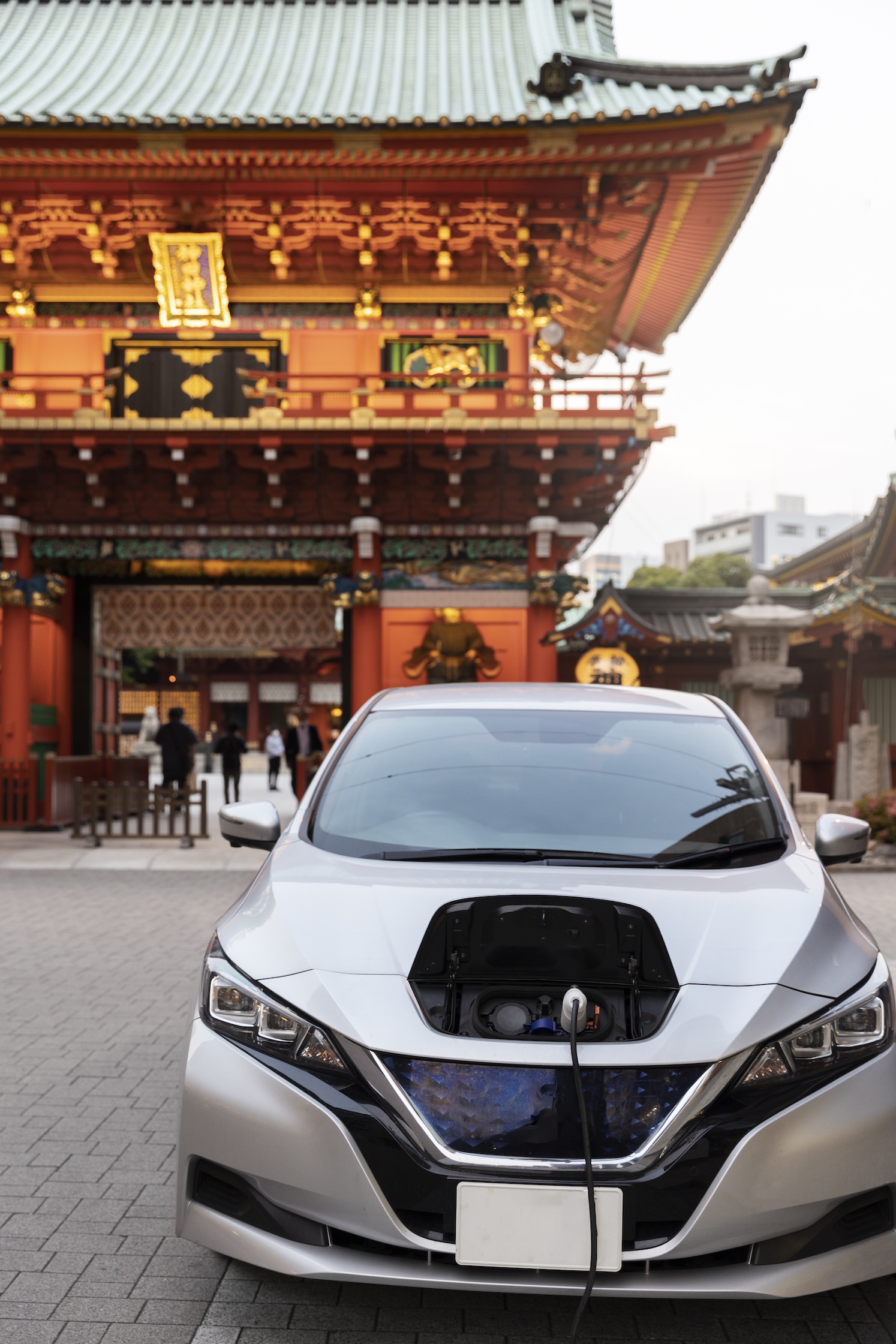
    Official dealers for major brands — Toyota, Honda, Nissan, Hyundai — offer new vehicles with local warranty support and established after-sales networks. This is the most premium local buying experience available.

    Advantages:

    • Local warranty servicing at authorised centres
    • No import logistics to manage
    • Immediate availability (if in stock)
    • Established brand presence and resale recognition

    Disadvantages:

    • Significantly higher prices: a new Toyota Corolla through an official Nigerian dealer costs ₦45–₦60 million+. The equivalent through Autoimport Africa from China would be a new, equally spec’d Chinese sedan at ₦25–₦35 million landed.
    • Limited technology: official dealers bring models that are 1–2 years behind the latest releases. You’re paying premium prices for yesterday’s technology.
    • Narrow model selection: dealers stock what they choose to import. You’re limited to their inventory.
    • Petrol-only: most official Nigerian dealers still offer predominantly ICE vehicles. NEV options are extremely limited.

    Verdict: Good option if you prioritise convenience, established local service network, and brand recognition — and are willing to pay a significant price premium for it.
    Japanese vehicle
    Japanese brands through official dealers offer reassurance — but at prices that are often ₦15–25 million higher than equivalent new Chinese vehicles

    Option 2: Used Imported Car from Local Trader

    This is the most common vehicle acquisition path in Nigeria — buying a used car from a dealer at Trade Fair, Berger, or similar markets, or from an individual seller.

    Advantages:

    • Immediate availability — drive it home today
    • Lower upfront cost (but see below for the full picture)
    • Wide variety of makes and models available

    Disadvantages:

    • Unknown history: most used cars sold locally have no verifiable accident, maintenance, or ownership history. You are trusting the seller entirely.
    • Hidden damage risk: structural accident damage, flood damage, and odometer fraud are widespread in the Nigerian used car market.
    • No warranty: buying used typically means zero remaining manufacturer warranty coverage.
    • Older technology: a 3–5 year old vehicle lacks the ADAS, connected features, and NEV efficiency available in new Chinese vehicles at similar or lower prices.

    Verdict: Accessible and immediate, but carries significant hidden risk. The price advantage over a new Chinese import is often smaller than it appears once you factor in potential repair costs, no warranty, and older technology.

    Option 3: New Chinese Vehicle Through Autoimport Africa

    Advantages:

    • New vehicle — no history, no hidden damage, no prior owner
    • Full manufacturer warranty from day one
    • Latest model year with the most advanced technology
    • NEV options (BEV, PHEV, EREV) available at every price point
    • Clean title by definition
    • Transparent, upfront pricing covering the full import cost
    • End-to-end logistics handled including optional clearing and home delivery
    • Significantly lower price than equivalent Japanese/Korean vehicles through official dealers

    Disadvantages:

    • 6–10 week lead time from order to delivery
    • Local after-sales network is still developing for many Chinese brands (though expanding rapidly)
    • Currency exposure over the import window (manageable with proper planning)

    Verdict: Best value per naira spent, with the highest transparency and lowest risk — at the cost of a waiting period and slightly less mature local service infrastructure.

    Happy buyer with new Autoimport Africa vehicle
    Autoimport Africa delivers more car, better warranty, and cleaner history — at a lower price than any local alternative

    The Bottom Line

    If you need a car tomorrow, the local used market or an in-stock dealer car is your only option. If you can plan 6–10 weeks ahead, Autoimport Africa delivers more car, more technology, more warranty, and cleaner history at a lower price than either alternative.

    For buyers who value what they get for their money — and who’ve been burned by hidden damage or surprise repair bills in the past — the choice is clear.


  • The Business Case for Importing Chinese NEVs for Your Nigerian Fleet in 2026

    The Business Case for Importing Chinese NEVs for Your Nigerian Fleet in 2026

    Running a business fleet in Nigeria in 2026 is expensive. Petrol prices remain elevated, vehicle maintenance costs have increased with the naira’s devaluation making imported spare parts pricier, and the cost of acquiring reliable vehicles has risen significantly. For fleet managers and business owners operating more than three vehicles, these costs compound rapidly.

    The smartest businesses in Nigeria are already solving this problem by switching to Chinese NEVs — and importing them directly through platforms like Autoimport Africa rather than buying locally.

    Nigerian business district with cars
    For Nigerian businesses running multiple vehicles, switching to Chinese NEVs can save millions in annual fuel and maintenance costs

    The Petrol Cost Problem at Fleet Scale

    A typical corporate fleet sedan — say, a Toyota Corolla or Honda Accord — consumes approximately 8–10 litres per 100km. At Nigerian petrol prices of around ₦1,000–₦1,100 per litre, that’s ₦8,000–₦11,000 per 100km per vehicle.

    A fleet vehicle doing 150km per day spends approximately ₦1.2–₦1.65 million on fuel annually. Multiply that by 10 vehicles and you’re looking at ₦12–₦16.5 million in fuel per year — before maintenance, tyres, or insurance.

    Switch those vehicles to a Chinese PHEV or EREV, where the majority of daily city driving happens on electric power, and fuel costs fall by 60–80%. On a 10-vehicle fleet, that could mean ₦8–₦12 million in annual savings.

    Why Chinese NEVs Make Sense for Business Fleets

    Lower acquisition cost: A new BYD Seal or BYD Atto 3 imported through Autoimport Africa costs significantly less than a new Toyota or Honda of equivalent size.

    Lower running costs: Electricity is cheaper than petrol per kilometre. Electric motors have fewer moving parts — no oil changes, fewer brake replacements, no timing belt.

    Longer warranties: BYD offers 6-year vehicle warranties and 8-year battery warranties on key models.

    Clean title, zero history: Every vehicle sourced through Autoimport Africa is new — no accident history, no undisclosed repairs, no mileage fraud.

    Real-time tracking integration: Many Chinese NEVs come with connected vehicle apps that allow fleet managers to monitor battery levels, vehicle location, and driving behaviour from a phone.

    Fleet vehicles ready for business
    Chinese NEVs imported through Autoimport Africa are ideal for corporate fleets — lower costs, longer warranties, full documentation

    Best Chinese Vehicles for Corporate Fleet Use

    BYD Atto 3 (BEV): Compact SUV, ideal for urban corporate travel. Pure electric, low running cost, professional appearance.

    BYD Seal (BEV): Executive sedan with sporty profile. Excellent choice for senior staff vehicles.

    BYD Sealion 6 (PHEV): Mid-size SUV with electric-first driving and petrol backup. Ideal for managers who do a mix of city and inter-city travel.

    BYD Shark 6 (PHEV pickup): For businesses in logistics, construction, or agriculture. PHEV technology in a pickup format.

    Chery Tiggo 8 Pro (PHEV): Seven-seat PHEV SUV ideal for larger executive groups or airport transfers.

    How Autoimport Africa Supports Fleet Buyers

    Autoimport Africa makes fleet importing practical at scale. Whether you need 3 vehicles or 30, the platform handles the same end-to-end process — selection, procurement in China, shipping, customs clearing, and home delivery — with consistent documentation for each vehicle.

    For fleet buyers, having every vehicle’s documentation in order from day one (commercial invoice, bill of lading, VIN records, manufacturer documentation) simplifies insurance, registration, and company accounting.

    EV charging for fleet
    As Nigeria’s charging infrastructure grows, EV fleet running costs will only improve — making the switch now a smart long-term investment

    Talk to our team about fleet pricing and timing for multi-vehicle orders. The savings at scale are significant — and the switch to clean Chinese NEVs is one of the most impactful decisions a Nigerian business can make in 2026.

  • The 2026 China Export Surge: Why More Affordable Chinese Cars Are Heading to Africa Than Ever Before

    The 2026 China Export Surge: Why More Affordable Chinese Cars Are Heading to Africa Than Ever Before

    Something interesting is happening in the global car market — and African importers stand to benefit enormously from it.

    China, the world’s largest auto producer and exporter, is experiencing a significant slowdown in its domestic car market in 2026. Sales at home are down, a brutal price war is squeezing margins, and production capacity is running well above domestic demand. So where is all that production going? Overseas. And Africa is one of the most important destinations.

    China manufacturing and city
    China’s automotive industry is producing at record scale, with exports becoming its primary growth engine in 2026

    China’s Domestic Market Is Slowing

    After years of explosive growth driven by government trade-in subsidies, China’s auto market entered 2026 on weak footing. January and February 2026 saw vehicle sales fall roughly 22.9% year-on-year as subsidy programmes were scaled back and Lunar New Year timing shifted demand. While the market has since stabilised, overall growth projections for 2026 are just 1% — down sharply from 9.4% growth in 2025.

    Domestically, Chinese automakers are fighting each other in an intense price war. BYD, Chery, Geely, SAIC, and dozens of other brands are all chasing the same buyers with increasingly aggressive discounts. Profit margins are under severe pressure. For producers, the only way to maintain healthy operations is to grow exports.

    Exports Are Surging — Africa Is a Key Destination

    China closed 2025 with a record 7.1 million vehicle exports — cementing overseas markets as a core outlet for industry growth. That momentum has carried into 2026. In the first two months of 2026 alone, exports reached approximately 1.35 million units — roughly 48% ahead of the same period in 2025.

    The export mix is also shifting rapidly. Nearly 43% of China’s auto exports are now new energy vehicles (NEVs) — electric, plug-in hybrid, and extended-range models. This means Africa is increasingly receiving not just affordable cars, but genuinely modern, technology-rich vehicles.

    Nigerian car buyer
    African buyers are increasingly the target market for China’s record vehicle export volumes

    Why This Creates an Opportunity for African Buyers

    When a manufacturer has more supply than domestic demand, three things happen: prices get competitive, inventory choices expand, and export programmes become a strategic priority rather than an afterthought.

    For African buyers importing from China in 2026, this translates to:

    • More competitive pricing: China’s domestic price war has driven new vehicle prices down significantly. Smaller margins at home mean manufacturers are willing to compete aggressively on export pricing too.
    • Greater model variety: More brands and models are being made export-ready than ever before. Vehicles that were previously only available in China are increasingly coming with right-hand drive options and global homologation.
    • Newer technology at lower price points: The pressure to innovate domestically means Chinese brands are putting advanced ADAS, large displays, and long-range battery technology into mass-market vehicles — not just premium ones.
    • Motivated sellers: Chinese manufacturers and trading companies are actively courting African markets. This creates better service conditions, better after-sales support development, and more flexible payment arrangements for bulk or fleet buyers.

    The NEV Export Shift Is Especially Important for Africa

    The fact that nearly half of China’s exports are now electrified vehicles is a game-changer for Africa. Previously, most Chinese vehicles reaching the continent were conventional petrol or diesel models. Now, the same export wave is bringing PHEVs and EREVs at price points that make clean transportation genuinely accessible.

    A PHEV SUV from China now costs less than a used Japanese petrol SUV of equivalent age and spec — but offers electric efficiency for daily city driving, petrol backup for long trips, and significantly lower running costs over time.

    African woman with new car
    Autoimport Africa connects African buyers directly to China’s competitive vehicle market — clean titles, new models, no middlemen

    How to Take Advantage of This Moment

    The window to get the best combination of price, choice, and model freshness is now. As Chinese exports become more structured and regulated in coming years — and as African governments introduce more formal certification and import requirements — buying directly from source through a trusted importer platform remains the most cost-effective route.

    Autoimport Africa is built for exactly this moment — giving African buyers direct access to China’s full vehicle market, with clean titles, transparent pricing, and end-to-end logistics support. The global export surge is your opportunity. Make the most of it.